

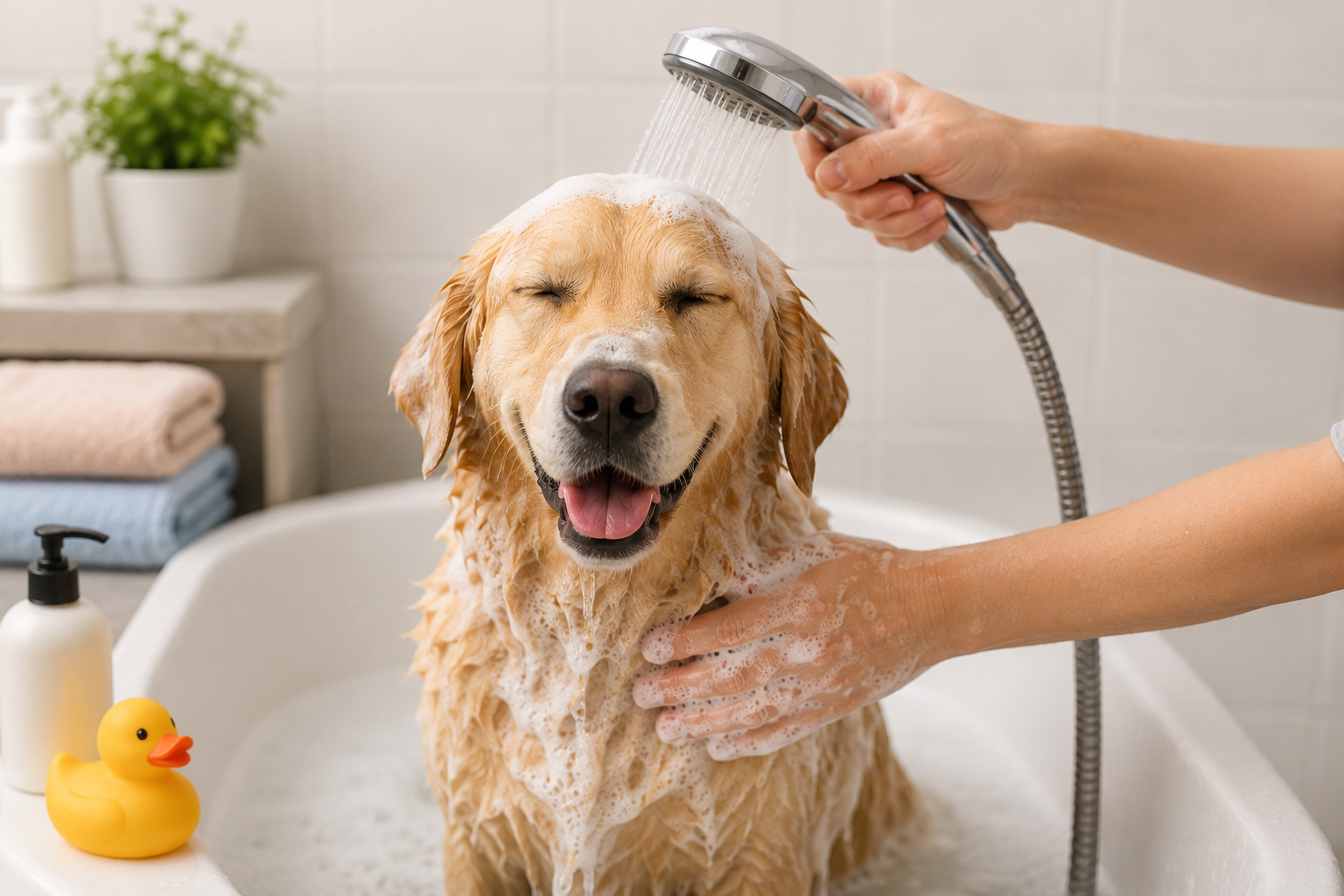
Ask ten dog owners how often they bathe their dogs and you will likely get ten different answers. Some bathe their dogs weekly. Some stretch it to every few months. A few admit they have not bathed their dog since they brought them home and honestly cannot remember when that was. The reality is that there is no single correct answer that applies to every dog — but there are clear, practical principles that make finding the right schedule for your dog entirely possible.
Bathing frequency is one of the most genuinely misunderstood aspects of dog care. Bathe too rarely and you risk skin irritation, odor, and coat problems that build up quietly over time. Bathe too often and you strip the natural oils that protect your dog’s skin and coat, creating dryness and sensitivity that can actually worsen the very problems you were trying to prevent.
This guide walks you through everything you need to know about how often to bathe your dog, based on coat type, breed, lifestyle, age, and health status. You will also find a step-by-step bathing guide, shampoo recommendations, and practical tips for making bath time easier for both of you.
Quick Answer
Most dogs benefit from a bath every four to six weeks as a general starting point, but the right frequency depends on your dog’s coat type, breed, activity level, skin health, and lifestyle. Short-haired dogs may only need bathing every six to eight weeks. Long-haired and curly-coated dogs often need bathing every three to four weeks. Hairless breeds require more frequent bathing, sometimes weekly. Dogs with skin conditions or allergies should follow a bathing schedule recommended by their veterinarian.
Why Regular Bathing Is Important for Dogs
A dog’s skin is their largest organ and their first line of defense against bacteria, environmental allergens, and external parasites. Maintaining that barrier through regular, appropriate bathing is not purely cosmetic — it has direct implications for your dog’s overall health.
Regular bathing removes accumulated dirt, pollen, dust mites, and environmental debris from the coat and skin surface. For dogs with seasonal allergies, this is particularly significant because allergens that stick to fur can trigger or worsen skin reactions if left in place. Bathing also removes dead skin cells, excess sebum (the natural skin oil produced by sebaceous glands), and surface bacteria that can cause odor and, in excess, contribute to skin infections.
Beyond the health dimension, bathing gives you an extended, hands-on opportunity to examine your dog’s skin, coat, ears, paws, and body for anything unusual — lumps, lesions, flea activity, hot spots, or areas of tenderness. Many early-stage health issues are first noticed during bath time by attentive owners.
The social and practical benefits are equally real. A clean dog is a more pleasant companion to live with, more welcome in cars and on furniture, and significantly easier to manage in terms of household hygiene.
How Often Should You Bathe Your Dog?
The four to six week guideline is the most commonly cited starting point from veterinary and grooming professionals, and it works well for many dogs with average activity levels and no specific skin or coat conditions. But it is genuinely a starting point — not a universal prescription.
A working farm dog that spends every day outdoors in mud and livestock environments may need bathing more frequently than a pampered lap dog that rarely ventures beyond the living room and backyard. A Poodle with a dense, curly coat that traps debris has different bathing needs than a Greyhound with a short, smooth coat that sheds dirt naturally.
| Dog Category | Recommended Bathing Frequency |
|---|---|
| Average indoor dog with short coat | Every 6–8 weeks |
| Average indoor dog with medium coat | Every 4–6 weeks |
| Long-haired or curly-coated dog | Every 3–4 weeks |
| Double-coated breeds | Every 6–8 weeks (more during shedding season) |
| Hairless breeds | Weekly or as needed |
| Highly active outdoor dogs | Every 2–4 weeks depending on activity |
| Dogs with skin conditions or allergies | Per veterinarian recommendation |
| Puppies (under 8 weeks) | Avoid bathing; spot clean only |
| Puppies (8 weeks and older) | As needed, typically monthly |
Use this table as a framework. The most accurate bathing schedule for your individual dog will develop through observation over time.
Factors That Affect How Often a Dog Needs a Bath
Age
Puppies under eight weeks should not be bathed with water as they cannot yet regulate their body temperature effectively. From eight weeks onward, puppies can be bathed as needed, but the process should be kept brief, warm, and stress-free to build positive associations.
Senior dogs may have thinner, more sensitive skin and reduced sebaceous gland activity. Their bathing needs often decrease, and the products and water temperature used should be adapted to their more delicate skin.
Breed
Breed is one of the most significant factors in determining appropriate bathing frequency. Breeds developed for water work — Labrador Retrievers, Portuguese Water Dogs, and Irish Water Spaniels — often have water-resistant coat oils that more frequent bathing can strip. Breeds with heavy folding skin — Shar Peis and Bulldogs — need regular cleaning in skin folds regardless of full bathing frequency.
Coat Type
Coat type directly influences how quickly dirt, debris, and odor accumulate. Long, dense coats trap more material. Smooth, short coats shed dirt more readily. Double coats have a protective outer layer that resists some environmental debris. Hairless dogs have exposed skin that accumulates oils and debris without a coat to distribute them.
Activity Level
A dog that swims daily, runs through fields, and digs in the garden has dramatically different bathing needs than a dog that takes two leash walks per day on paved streets. Activity level and bathing frequency are directly proportional.
Indoor vs Outdoor Dogs
Primarily indoor dogs with limited outdoor exposure accumulate environmental debris more slowly and typically need less frequent bathing. Outdoor dogs, especially those with outdoor sleeping arrangements, may need bathing every two to three weeks to maintain reasonable hygiene.
Season
Spring and autumn can trigger more frequent bathing needs due to increased pollen, muddy conditions, and in the case of double-coated breeds, heavy shedding seasons where bathing helps facilitate the shedding process. Summer heat increases natural oil production in some dogs. Winter cold and indoor heating can cause dry skin that is worsened by over-bathing.
Skin Conditions
Dogs with seborrheic skin conditions may produce excess sebum and require more frequent bathing with medicated shampoos. Dogs with bacterial or fungal skin infections may be prescribed specific shampoo formulas used on a therapeutic schedule determined by their veterinarian. Bathing frequency for any dog with a diagnosed skin condition should always be guided by veterinary recommendation rather than general guidelines.
Medical Conditions
Hormonal conditions including hypothyroidism and Cushing’s disease can alter skin quality and sebum production, affecting how quickly the coat becomes oily or develops odor. Dogs managing these conditions often need adjusted grooming routines.
Allergies
Dogs with environmental or contact allergies may benefit from more frequent rinsing or bathing to remove allergens from the coat and skin surface. According to the Merck Veterinary Manual, bathing can be an effective adjunct therapy for dogs with allergic skin disease by reducing surface allergen load. However, the frequency and shampoo type should be determined in consultation with a veterinarian or veterinary dermatologist.
Bathing Schedule by Coat Type
| Coat Type | Bathing Frequency | Notes |
|---|---|---|
| Short and smooth | Every 6–8 weeks | Natural shedding cleans the coat effectively |
| Medium-length | Every 4–6 weeks | Moderate debris accumulation |
| Long-haired | Every 3–4 weeks | Higher maintenance, tangles trap debris |
| Double coat | Every 6–8 weeks | Over-bathing disrupts coat insulation |
| Hairless | Weekly or as directed by vet | Exposed skin accumulates oils and debris |
| Curly or wavy coat | Every 3–4 weeks | Dense curls trap debris and form mats |
| Wire coat | Every 4–6 weeks | May need hand-stripping rather than bathing |
Short-Haired Dogs
Short-coated breeds like Beagles, Boxers, and Dalmatians are among the easiest to maintain hygienically. Their coats shed naturally and do not trap debris the way longer coats do. Bathing every six to eight weeks is appropriate for most, with spot cleaning between baths handling any localized dirt.
Medium-Coated Dogs
Medium-length coated breeds like Labrador Retrievers and Golden Retrievers fall in the middle range. Their coats are longer than smooth breeds but shorter than true long-haired breeds. Every four to six weeks works well as a starting point, with adjustment based on outdoor activity level.
Long-Haired Dogs
Long-haired breeds — including Afghan Hounds, Yorkshire Terriers, and Maltese — accumulate tangles, debris, and odor in their coats more readily than shorter-coated dogs. Regular bathing every three to four weeks, paired with frequent brushing between baths, keeps their coats healthy and manageable.
Double-Coated Dogs
Double-coated breeds such as Siberian Huskies, Samoyeds, and Bernese Mountain Dogs have a dense undercoat beneath a weather-resistant outer coat. This combination provides insulation and naturally repels some environmental debris. Over-bathing disrupts the coat’s natural structure. Every six to eight weeks is appropriate for most double-coated breeds outside of shedding season, when an additional bath can help facilitate undercoat removal.
Never shave a double-coated breed. The double coat provides insulation against both cold and heat, and shaving can permanently alter coat texture and thermal regulation.
Hairless Dogs
Chinese Crested hairless dogs, Xoloitzcuintlis, and American Hairless Terriers require the most attentive skin care of any dog type. Without a coat to distribute sebum and absorb surface debris, their skin accumulates oils and becomes dirty more quickly. Weekly bathing with a gentle, skin-appropriate shampoo is often recommended, though your veterinarian may advise a different frequency depending on your individual dog’s skin type and condition.
Curly-Coated Dogs
Poodles, Lagotto Romagnolos, and similar curly-coated breeds have dense, tightly wound coats that trap debris, moisture, and dander effectively. These coats also mat quickly when allowed to accumulate debris and tangles. Bathing every three to four weeks, combined with professional grooming trims, keeps curly coats healthy and comfortable.
Bathing Schedule by Dog Breed
| Breed | Coat Type | Recommended Bathing Frequency |
|---|---|---|
| Labrador Retriever | Short, dense | Every 4–6 weeks |
| Golden Retriever | Medium, water-resistant | Every 4–6 weeks |
| German Shepherd | Double coat | Every 6–8 weeks |
| Poodle | Curly | Every 3–4 weeks |
| Shih Tzu | Long | Every 3–4 weeks |
| Beagle | Short | Every 6–8 weeks |
| French Bulldog | Short with skin folds | Every 4–6 weeks; skin folds cleaned weekly |
| Chihuahua | Short or long depending on variety | Every 4–6 weeks |
| Siberian Husky | Double coat | Every 6–8 weeks |
| Border Collie | Medium to long, double coat | Every 4–6 weeks |
Labrador Retriever: Labs have a short, dense, water-resistant coat developed for water retrieving. Their natural coat oils are an important part of their coat function — over-bathing strips these oils. Every four to six weeks is appropriate for most Labs, with more frequent bathing only when genuinely needed.
Golden Retriever: Goldens have a medium-length, feathered double coat that requires regular bathing and thorough drying to prevent odor and matting. Every four to six weeks with thorough drying — particularly in the dense undercoat area — keeps their coats in good condition.
German Shepherd: German Shepherds have a dense double coat that sheds year-round and heavily twice yearly. They are naturally clean dogs that manage their own hygiene reasonably well. Every six to eight weeks is appropriate outside of shedding season, with additional baths during heavy shedding periods to help manage undercoat removal.
Poodle: Poodles are often cited as lower-allergen dogs because their curly coat traps shed hair rather than releasing it into the environment. This same quality means the coat requires bathing every three to four weeks to prevent matting and accumulation of trapped debris.
Shih Tzu: The long, flowing coat of a Shih Tzu needs regular bathing every three to four weeks at minimum. Their facial hair — which grows toward the eyes — also needs frequent cleaning and wiping to prevent discharge accumulation around the eyes.
Beagle: Beagles have short, dense coats that are relatively easy to maintain. They do tend toward a hound-specific odor that some owners find builds up more quickly than in other short-coated breeds. Every four to six weeks is typical, though individual dogs may need more or less.
French Bulldog: Frenchies have short coats that require minimal bathing — every four to six weeks is generally adequate. However, their facial folds, skin wrinkles, and the fold above the tail base require cleaning every few days to prevent moisture and debris buildup that creates the conditions for bacterial and yeast infections.
Chihuahua: Smooth-coated Chihuahuas need minimal bathing — every four to six weeks is generally sufficient. Long-coated Chihuahuas need slightly more frequent bathing and regular brushing to prevent tangles.
Siberian Husky: Huskies are fastidious self-groomers, not unlike cats in their attention to their own cleanliness. Their double coat repels dirt effectively, and they rarely develop significant odor. Every six to eight weeks is typically sufficient, with additional bathing during the twice-yearly heavy shedding period.
Border Collie: Border Collies are working dogs that often spend considerable time outdoors. Their medium to long double coat accumulates debris from active outdoor work. Every four to six weeks with thorough brushing between baths keeps their coats healthy.
How Often Should You Bathe a Puppy?
When Puppies Can Have Their First Bath
Puppies under eight weeks of age should not be submerged in water for a full bath. They cannot yet regulate their own body temperature efficiently, which puts them at risk of hypothermia even in what seems like a warm bath. Before eight weeks, spot cleaning with a warm, damp cloth handles any localized dirty spots safely.
From eight weeks onward, puppies can have their first full bath. Keep the first few baths brief, warm, and as positive as possible. Use a tearless puppy-specific shampoo. The goal of early baths is as much about building positive associations with bathing as it is about cleaning — a puppy that learns to accept and even enjoy bath time becomes a far easier dog to groom throughout their life.
Safe Bathing Frequency
Most puppies do not need bathing more than once a month in their early weeks, unless they get into something messy. Frequent bathing is not necessary and can dry out a young puppy’s sensitive skin. As puppies grow and become more active, bathing frequency can be adjusted based on their lifestyle and coat type.
Special Puppy Care Tips
Always use water that is comfortably warm — not hot and not cold. Test it on the inside of your wrist. Rinse every trace of shampoo completely — residue is a common cause of post-bath itching in puppies. Keep the puppy wrapped in a warm towel immediately after the bath to maintain body temperature. Dry thoroughly before allowing them into a cool environment.
Signs Your Dog Needs a Bath
Bad Odor: The most obvious signal. A dog that smells noticeably unpleasant — beyond the normal “dog smell” that most owners are accustomed to — is telling you a bath is overdue.
Dirty Coat: Visible dirt, dust, or debris in the coat indicates it is time for a bath regardless of where you are in your regular schedule.
Greasy Fur: A greasy, almost waxy feeling to the coat indicates sebum buildup that brushing alone will not address. A thorough bath with an appropriate shampoo is needed.
Itching: While itching can be a sign of allergies, parasites, or skin conditions that a bath will not resolve, environmental allergens accumulated in the coat can trigger or worsen skin sensitivity. A rinse with a gentle shampoo can provide temporary relief while you assess the underlying cause.
Mud and Debris: After outdoor adventures that result in a heavily muddy or debris-covered coat, a bath is practical rather than optional.
Seasonal Allergens: During high pollen seasons, wiping your dog down after outdoor time and bathing more frequently can reduce the amount of allergen they carry back into your home and against their own skin.
Can You Bathe Your Dog Too Often?
Yes — and this is a more common mistake than most owners realize. The consequences are not immediately obvious, which is why over-bathing often continues unchecked until skin problems develop.
Dry Skin
A dog’s skin produces sebum — a natural oil that lubricates the skin, conditions the coat, and forms a protective barrier against environmental bacteria and allergens. Bathing removes sebum. The skin replenishes it over time, but if bathing happens too frequently, the skin cannot keep pace with the depletion. The result is chronically dry, flaky, and irritated skin.
Skin Irritation
Stripping the skin’s natural oils repeatedly can create microcracks in the skin barrier — tiny, invisible breaks that allow irritants and bacteria easier access to the deeper layers of the skin. This can manifest as redness, itching, and increased sensitivity to products and environmental allergens.
Loss of Natural Oils
Beyond skin health, natural coat oils give a dog’s fur its sheen and texture. A coat that has been over-bathed often appears dull, feels dry, and becomes more prone to tangling and static. In double-coated breeds, disrupting coat oils can affect the coat’s insulating properties.
Coat Damage
Frequent bathing combined with heat drying can progressively damage the hair shaft, resulting in brittle, breakage-prone fur over time.
When to Consult a Veterinarian
If your dog’s skin seems dry, flaky, red, or irritated regardless of bathing frequency, consult your veterinarian before adjusting your routine. These symptoms have multiple possible causes — including allergies, hormonal conditions, parasites, and nutritional deficiencies — and addressing the wrong cause will not resolve the problem.
Choosing the Right Dog Shampoo
The shampoo you use matters as much as how often you use it. Dog skin has a different pH than human skin, and dog-specific shampoos are formulated to maintain that balance.
| Shampoo Type | Best For | When to Use |
|---|---|---|
| Puppy shampoo | Puppies and sensitive dogs | All puppy baths; sensitive adult dogs |
| Sensitive skin shampoo | Dogs with mild skin sensitivity | Ongoing use for sensitive skin dogs |
| Medicated shampoo | Dogs with bacterial or fungal skin infections | Only per veterinary prescription or direction |
| Hypoallergenic shampoo | Dogs with allergies or known sensitivities | Dogs reacting to standard shampoos |
| Flea and tick shampoo | Active flea or tick infestations | As directed; not a standalone prevention |
| Oatmeal shampoo | Dry, itchy, or mildly irritated skin | Periodic use for comfort; not for infected skin |
Puppy Shampoo: Tearless formulas with gentle surfactants that will not irritate the eyes or sensitive young skin. Appropriate for puppies of all ages and also useful for adult dogs with sensitive skin.
Sensitive Skin Shampoo: Formulated with minimal irritating ingredients, typically free of artificial fragrances and dyes. Appropriate for dogs with mild skin sensitivity or those that react to standard shampoos.
Medicated Shampoo: Prescribed or recommended by a veterinarian for dogs with bacterial skin infections (pyoderma), fungal infections (ringworm), or seborrheic conditions. These shampoos contain active ingredients such as chlorhexidine, ketoconazole, or benzoyl peroxide and should be used only as directed. Using medicated shampoo without veterinary guidance on a dog that does not have the target condition can cause unnecessary skin irritation.
Hypoallergenic Shampoo: Designed for dogs with known allergies or hypersensitivity to common shampoo ingredients. These formulas avoid common irritants and are appropriate for ongoing use in atopic dogs.
Flea and Tick Shampoo: These shampoos kill fleas and ticks on contact during the bath but provide no residual protection after the shampoo is rinsed off. They are not a substitute for vet-recommended preventive flea and tick products and should be used as a supplementary measure during active infestations, not as a primary prevention strategy.
Oatmeal Shampoo: Colloidal oatmeal has soothing properties for dry, mildly irritated, or itchy skin. Oatmeal shampoos are appropriate for dogs with general skin dryness or mild discomfort. They are not appropriate for dogs with infected skin, as moisture retention can worsen bacterial or yeast conditions.
Step-by-Step Guide to Bathing Your Dog
Preparing the Bath
Gather everything before you bring your dog into the bathing area — shampoo, towels, non-slip mat, brush, and a handheld showerhead or cup for rinsing. Place a non-slip mat in the tub or sink to prevent your dog from slipping, which causes anxiety and makes the process harder for everyone. Have your towels within reach so you are not leaving a wet dog unattended.
Brushing Before Bathing
Always brush your dog thoroughly before getting them wet. Water tightens tangles and mats into firm, painful knots that are significantly harder to remove after bathing than before. Removing loose fur before the bath also prevents drains from clogging with large quantities of shed hair.
Water Temperature
Use comfortably warm water — similar to what you would use for a baby’s bath. Test the temperature on the inside of your wrist or forearm before wetting your dog. Hot water causes discomfort and can scald sensitive skin. Cold water is stressful and potentially risky for puppies and senior dogs who cannot regulate body temperature as effectively.
Applying Shampoo
Wet the coat thoroughly before applying shampoo — it is virtually impossible to distribute shampoo evenly on a dry coat, and dry shampoo application wastes product. Apply shampoo from the neck back, working it into the coat with gentle massaging motions down to the skin surface. Use a separate, gentler product or diluted shampoo on the face, avoiding the eyes and ears.
Rinsing Thoroughly
Thorough rinsing is arguably the most important step in the bathing process. Shampoo residue left in the coat is one of the most common causes of post-bath itching, skin irritation, and dull coat appearance. Rinse until the water runs completely clear and the coat feels free of slipperiness. Then rinse again for good measure, particularly in thick or long-coated breeds where residue hides easily.
Drying Properly
Begin by wrapping your dog in an absorbent towel and gently squeezing — not rubbing — excess water from the coat. Rubbing creates tangles in long-coated breeds and can be uncomfortable for dogs with sensitive skin.
If your dog tolerates a blow dryer, use a pet-specific dryer or a household dryer set to low heat, kept moving continuously and checked against the back of your hand to avoid overheating the skin. Never use high heat settings. In warm weather, air drying is a reasonable option for short-coated dogs, but ensure your dog is in a warm environment and fully dry before going outside in cold or windy conditions. A dog with a thick, dense undercoat should never be left partially wet — moisture trapped against the skin creates ideal conditions for bacterial infections sometimes called “hot spots.”
Post-Bath Grooming
Once your dog is dry, brush the coat thoroughly to prevent post-bath matting, check the ears for moisture — gently wiping the outer ear with a cotton ball to remove any water that has entered — and offer your dog a calm reward for tolerating the process.
Common Bathing Mistakes Dog Owners Make
| Mistake | Why It Is a Problem | What to Do Instead |
|---|---|---|
| Using human shampoo | Different pH disrupts dog skin barrier | Always use dog-specific shampoo |
| Skipping brushing before the bath | Water tightens mats into painful knots | Brush fully before getting dog wet |
| Leaving shampoo residue | Causes itching and skin irritation | Rinse until water runs completely clear |
| Using water that is too hot | Can scald sensitive skin | Test on your wrist; use comfortably warm water |
| Getting water in the ears | Creates warm, moist conditions for ear infections | Use cotton balls in ears; avoid direct water in ear canal |
| Blow drying on high heat | Can burn skin, dry out coat | Use low heat, keep dryer moving |
| Bathing too frequently | Strips natural skin oils, causes dryness | Follow a schedule appropriate for your dog’s coat type |
| Bathing too rarely | Allows debris, allergens, and odor to accumulate | Establish a regular schedule and maintain it |
| Not drying the undercoat completely | Trapped moisture causes hot spots | Dry thoroughly, especially in dense or double coats |
| Forcing a scared dog | Creates lasting negative associations with bathing | Build positive associations gradually using treats and calm handling |
Bathing Tips for Different Seasons
Summer
Bathing is often needed more frequently in summer due to increased outdoor activity, swimming, rolling in grass, and higher sebum production in warm temperatures. After swimming in lakes, rivers, or the ocean, a rinse with clean water — even without shampoo — removes chlorine, algae, salt, and bacteria from the coat that can cause irritation if left in place. In very hot weather, the post-bath drying process is less problematic and air drying in a warm, safe environment is reasonable for most dogs.
Winter
Cold weather and indoor heating combine to create challenging conditions for your dog’s skin. Low humidity indoors from central heating draws moisture from the skin, and frequent bathing in winter can worsen the resulting dryness. Reduce bathing frequency slightly if your dog shows signs of dry, flaky skin during winter months. When you do bathe your dog in winter, ensure they are completely dry before going outside — a wet or damp dog in cold weather is at risk of hypothermia, particularly small breeds, elderly dogs, and dogs with short coats or low body fat.
Rainy Season
Wet, muddy conditions during rainy seasons can create a cycle of frequent low-level dirtying that makes maintaining a regular bath schedule challenging. Paw cleaning after every outdoor outing — using a warm, damp cloth or paw cleaning tool — reduces how much mud and debris enters the house and the coat, reducing the need for full baths. Between baths, pet wipes handle many of the localized dirty patches that develop during muddy conditions.
Alternatives to Full Baths
Dog Wipes: Pre-moistened pet grooming wipes are useful for quick cleanup between baths — wiping down paws after muddy walks, cleaning facial folds in breeds prone to skin fold dermatitis, and freshening the coat surface. Choose wipes that are specifically formulated for dogs and free of fragrances, alcohol, and ingredients like tea tree oil that are toxic to dogs.
Dry Shampoo: Waterless dry shampoos for dogs absorb excess oil from the coat surface and can temporarily reduce odor. They are useful for dogs that cannot be bathed for medical reasons, dogs recovering from surgery, or simply as a between-bath freshening tool. Dry shampoo is not a long-term substitute for regular bathing — it manages odor and surface oil but does not clean the skin or remove deeper debris from the coat.
Spot Cleaning: For localized muddy patches, grass stains, or food mess, spot cleaning with a warm damp cloth or targeted application of diluted dog shampoo to the affected area addresses the immediate issue without a full bath. This is particularly useful for large dogs where a full bath is a significant undertaking.
Brushing: Regular brushing removes loose fur, surface debris, and some environmental allergens from the coat. It distributes sebum along the hair shaft, which improves coat condition between baths. Brushing is not a substitute for bathing but significantly extends the effective interval between baths in most dogs.
Professional Grooming: Professional groomers provide not only bathing and drying but also breed-appropriate trims, ear cleaning, nail grinding, and coat conditioning treatments. For owners who find bathing their dog at home genuinely difficult — due to the dog’s size, coat type, or temperament — professional grooming every four to six weeks is a practical and effective solution.
Frequently Asked Questions
How often should you bathe a dog that goes outside every day?
Dogs that spend significant time outdoors every day often need bathing more frequently than the general four to six week guideline — somewhere between every two and four weeks depending on the type of outdoor activity and how much debris they accumulate. After particularly muddy or smelly outdoor sessions, an unscheduled bath is entirely appropriate.
Is it okay to bathe a dog once a week?
Weekly bathing is appropriate for some dogs — particularly hairless breeds and dogs with certain skin conditions managed with therapeutic shampoos under veterinary guidance. For most dogs with normal skin and typical coat types, weekly bathing is too frequent and risks stripping natural oils and causing skin dryness. If your dog seems to need weekly bathing, discuss it with your veterinarian to rule out an underlying skin condition.
What happens if you never bathe your dog?
Dogs that are never bathed develop significant sebum accumulation, persistent odor, increased surface bacterial populations, and potentially skin inflammation over time. Environmental allergens and debris that remain in the coat can worsen skin sensitivity and contribute to ear and skin infections. Regular bathing is a genuine health care practice, not an optional cosmetic preference.
Can I use baby shampoo on my dog?
Baby shampoos are gentler than many adult human shampoos, and in true emergencies they are less damaging than harsh human products. However, even baby shampoo is formulated for human skin pH and is not ideal for regular use on dogs. Dog-specific shampoos formulated for a dog’s skin pH are always the better choice for routine bathing.
How do I get my dog to tolerate baths?
Desensitization is the most effective approach. Start by associating bath-related sounds and activities with treats and calm handling — run the water while feeding treats, bring your dog into the bathroom without bathing, and gradually progress to brief, positive bath experiences with generous reward. Never force a frightened dog through a bath — this creates lasting negative associations that make every future bath harder.
Should I bathe my dog before or after a walk?
This is largely a practical choice. Bathing after a walk means your freshly cleaned dog goes out clean, but it also means you are bathing them more frequently if walks frequently result in dirty coats. Many owners find bathing before a walk wastes the effort of the clean. Bathing after the last walk of the day is often the most practical timing.
What temperature should the water be when bathing a dog?
Comfortably warm — similar to the temperature you would use for an infant’s bath. Test it on the inside of your wrist or forearm. Hot water is uncomfortable and can damage skin. Cold water is stressful, particularly for puppies, senior dogs, and small breeds.
Do dogs need conditioner after shampooing?
Conditioner is beneficial for medium and long-coated dogs, curly-coated dogs, and any dog with a dry or brittle coat. It helps detangle the coat, reduces static, and adds a protective layer to the hair shaft. Short-coated dogs typically do not need conditioner, though it will not harm them. Always use dog-specific conditioner and rinse thoroughly.
How do I dry my dog after a bath without a blow dryer?
Towel drying is effective for removing the majority of surface moisture. Use a highly absorbent microfiber towel and gently squeeze — do not rub — the coat. Allow your dog to air dry in a warm room away from drafts. For short-coated breeds, this is usually sufficient. For thick, dense, or double-coated breeds, partial blow drying or allowing extra time in a warm room is needed because trapped moisture in a dense undercoat creates conditions for bacterial skin infections.
Is it okay to bathe a dog with a skin infection?
This depends entirely on the type and severity of the infection and must be guided by your veterinarian. Some skin infections require specific medicated shampoos bathed on a prescribed schedule as part of treatment. Others may temporarily contraindicate certain products or bathing methods. Never attempt to self-treat a skin infection with shampoo changes without veterinary guidance — using the wrong product can worsen the condition significantly.
Should I clean my dog’s ears during bath time?
You should prevent water from entering your dog’s ears during bathing by gently placing cotton balls in the outer ear canal. After the bath, remove the cotton balls and gently wipe the outer ear with a dry cotton ball to remove any moisture. Full ear cleaning with an ear cleaning solution is best done as a separate grooming step outside of bath time.
Why does my dog smell bad again almost immediately after a bath?
Several possible reasons: residual shampoo that was not fully rinsed and is now breaking down on the skin, the natural coat oils replenishing and mixing with environmental debris more quickly than average, dental disease or anal gland issues that create internal odor sources, or a skin condition that causes faster-than-normal sebum overproduction. If your dog consistently smells unpleasant within days of a bath, discuss it with your veterinarian.
Can I bathe a pregnant or nursing dog?
Yes, with appropriate precautions. Avoid medicated or strongly fragranced shampoos. Keep the water temperature moderate and avoid any temperature extremes. Limit stress and keep the bath process calm and brief. Ensure nursing mothers are dried completely before returning to their puppies. Discuss your grooming routine with your veterinarian during pregnancy for breed-specific guidance.
How long after getting a new puppy should I give them their first bath?
Allow your puppy at least a few days to settle into their new home before introducing bath time. Their first week involves significant emotional and sensory adjustment, and adding an unfamiliar stressful experience too early can heighten anxiety. Once your puppy seems comfortable with their environment, a gentle first bath using a tearless puppy shampoo introduces them positively to the grooming routine.
What shampoo should I avoid for dogs?
Avoid shampoos containing tea tree oil at concentrations above what is specifically tested and approved for dogs — tea tree oil can be toxic to dogs in higher concentrations. Avoid products containing xylitol, artificial preservatives with a history of allergic reactions, and any product not specifically formulated for dogs. Always check ingredient lists and consult your veterinarian if you are unsure about a product’s safety for your specific dog.
Final Thoughts
The right bathing schedule is not one size fits all — it is something you work out for your individual dog based on their coat type, breed, lifestyle, activity level, skin health, and the seasons you live through. The four to six week guideline gives most owners a reliable starting point, but your dog’s own signals — their smell, the feel of their coat, the condition of their skin — are the most accurate real-time information you have.
What remains consistent regardless of breed or frequency is the quality of the bathing process itself. The right shampoo for your dog’s needs, water at a comfortable temperature, thorough rinsing, complete drying, and a calm approach that makes your dog feel safe — these are the constants that determine whether bathing supports your dog’s health or inadvertently works against it.
Build a routine that works for your life and your dog’s needs. Adjust it seasonally and as your dog ages. And when in doubt — particularly if your dog has persistent skin issues, unusual odor, or coat changes — bring your veterinarian into the conversation. They are the most qualified resource you have for personalized grooming guidance.
A clean, well-cared-for coat is a small but genuinely meaningful part of a healthy, comfortable life for your dog. It is worth getting right.
References
- American Veterinary Medical Association (AVMA). Pet Care — Dog Care. https://www.avma.org/resources/pet-owners/petcare
- Merck Veterinary Manual. Dermatologic Diseases — Skin Disorders of Dogs. https://www.merckvetmanual.com/dog-owners/skin-disorders-of-dogs
- Cornell University College of Veterinary Medicine. Grooming Your Dog. https://www.vet.cornell.edu
- VCA Animal Hospitals. Bathing Your Dog. https://vcahospitals.com/know-your-pet/bathing-your-dog
- American Kennel Club (AKC). How Often Should You Bathe Your Dog? https://www.akc.org/expert-advice/dog-care/how-often-should-you-bathe-your-dog/
- American Animal Hospital Association (AAHA). Grooming and Coat Care. https://www.aaha.org
- ASPCA. Dog Care — Grooming. https://www.aspca.org/pet-care/dog-care/grooming
Author Bio
Written by the PetCareJournal Editorial Team
The PetCareJournal Editorial Team includes experienced pet care writers, certified animal behavior consultants, and veterinary health researchers dedicated to producing accurate, practical content for dog owners at every stage of their journey. Our grooming guides are developed in consultation with current veterinary dermatology recommendations and reviewed against guidelines from leading animal health organizations. Our goal is to give every dog owner the information they need to make confident, informed decisions about their pet’s grooming and health care.
Pet Care Disclaimer
The information in this article is provided for general educational and informational purposes only. It does not constitute professional veterinary advice, medical diagnosis, or treatment of any kind. Bathing frequency and shampoo recommendations should be adapted to your individual dog’s specific needs, health status, coat type, and veterinarian’s guidance. Dogs with skin diseases, allergies, infections, or other medical conditions should be examined by a licensed veterinarian before any changes are made to their grooming routine. In the event of a veterinary emergency or concern, contact your veterinarian or the nearest emergency animal hospital immediately. The PetCareJournal Editorial Team and publisher accept no liability for actions taken based on the content of this article.