

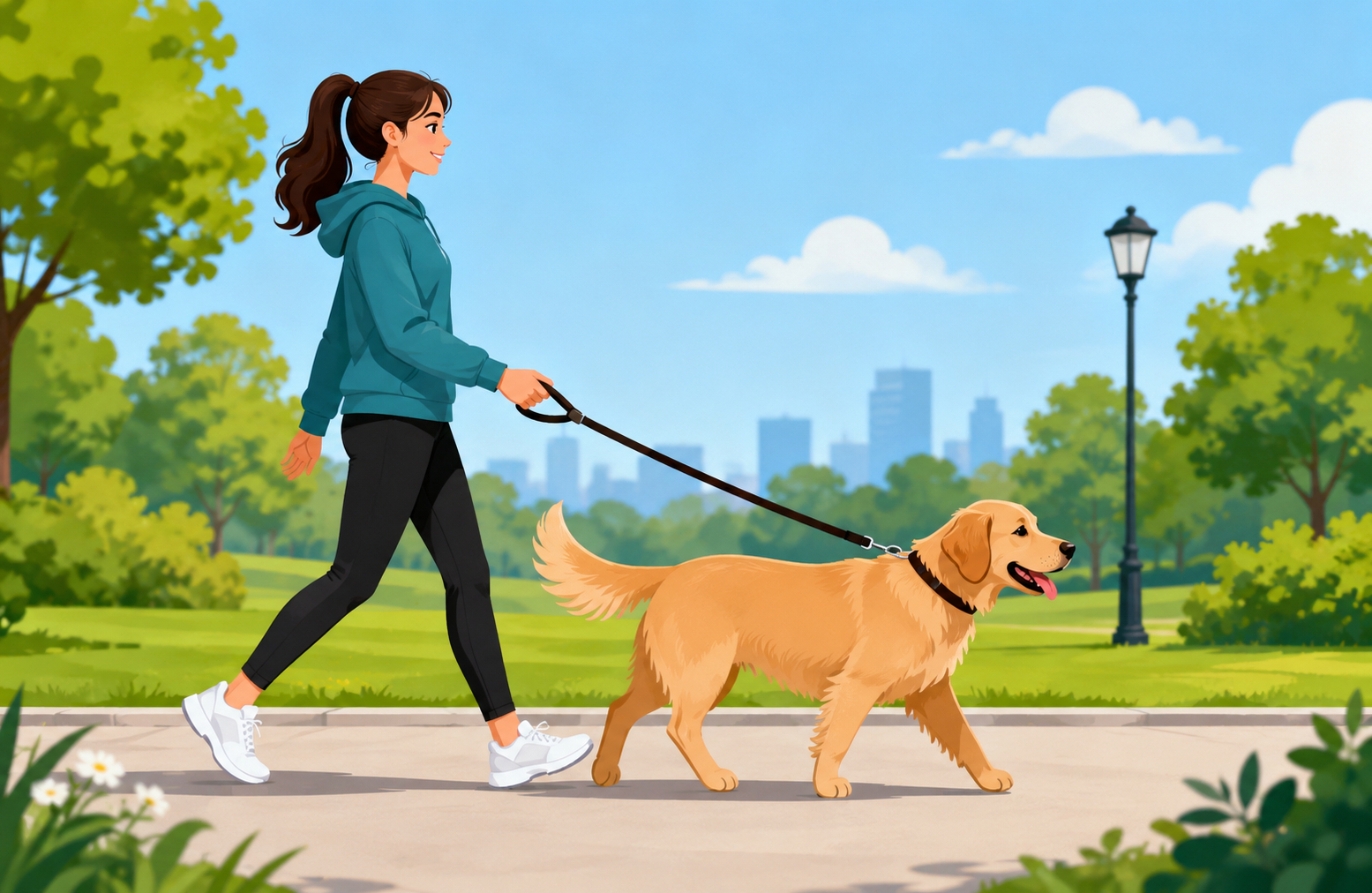
Every dog owner has asked themselves this question at some point — usually while watching their dog stare at them with that particular expression that somehow communicates both boredom and an urgent need to go outside simultaneously. How much walking is actually enough? How much is too much? And does the answer change depending on your dog’s age, breed, or health?
The honest answer is that it depends — but that is not a non-answer. The factors that shape a dog’s walking needs are well understood, and once you know what to look for, figuring out the right routine for your specific dog becomes genuinely straightforward.
Walking is not simply a bathroom necessity. For most dogs, it is one of the most important activities in their day — physically, mentally, and behaviorally. Getting this right has real consequences for your dog’s health, happiness, and the quality of your relationship with them. Getting it consistently wrong leads to problems that show up in your dog’s behavior, their waistline, and eventually their long-term health.
This guide gives you everything you need to build a walking routine that fits your dog’s actual needs — not a generic schedule that ignores who your dog is.
Quick Answer
Most adult dogs benefit from at least two walks per day, with a combined daily walking time of 30 minutes to two hours depending on breed, age, energy level, and health status. Puppies need short, frequent walks of five minutes per month of age at a time. Senior dogs benefit from shorter, gentler walks more frequently throughout the day. High-energy and working breeds typically need significantly more exercise than toy or low-energy breeds. Always consult your veterinarian for walking recommendations specific to your dog’s health and breed.
Why Daily Walks Are Important for Dogs
Walking does far more for a dog than simply burning calories. For most dogs, a walk is the primary mechanism through which they experience the world outside their home. Every scent on a lamp post, every sound from a distant street, every passing person or dog represents meaningful sensory input that a dog confined to the house simply cannot access.
From a physical standpoint, regular walking maintains cardiovascular fitness, supports healthy weight management, preserves muscle tone and joint mobility, and promotes healthy digestion and bowel regularity. Dogs that walk regularly tend to maintain healthier body weights, and the relationship between healthy weight and longevity in dogs is well documented in veterinary literature.
The mental benefits are equally significant. Dogs process an enormous amount of information through their nose. A single twenty-minute walk exposes a dog to hundreds of scent messages — other animals that passed by, food smells, environmental changes — and processing this information is genuinely cognitively tiring in the best possible way. A dog that has had a good walk is a dog whose brain has been engaged.
Behaviorally, regular adequate exercise is one of the most powerful preventive tools against the most common behavioral problems veterinarians and trainers see. Excessive barking, destructive chewing, digging, hyperactivity, and difficulty settling are almost universally more common in dogs whose exercise needs are not being met. A dog that has been properly exercised has far less pent-up energy to direct toward undesirable outlets.
How Often Should You Walk Your Dog?
The question has a different answer for every dog. A Greyhound and a Toy Poodle have dramatically different exercise requirements. A healthy three-year-old Border Collie and a twelve-year-old Basset Hound with arthritis require entirely different walking approaches. Age, breed, individual health status, body condition, and even personality all factor into what constitutes an appropriate walking routine.
That said, most healthy adult dogs of average activity requirements benefit from a minimum of two dedicated walks per day. Many benefit from three. The duration of those walks is where breed and energy level create the most significant variation.
| Dog Category | Walks Per Day | Total Daily Walk Time | Intensity |
|---|---|---|---|
| Puppy (under 4 months) | 3–5 short outings | 15–30 minutes total | Very low — gentle strolling |
| Puppy (4–6 months) | 3–4 walks | 20–40 minutes total | Low — structured but gentle |
| Average adult dog | 2–3 walks | 30–60 minutes | Moderate |
| High-energy/working breed | 2–4 walks | 60–120+ minutes | Moderate to vigorous |
| Senior dog (healthy) | 2–3 gentle walks | 20–40 minutes | Low to moderate |
| Senior dog (with mobility issues) | 2–3 very short walks | 15–25 minutes | Low — gentle only |
| Dog with medical conditions | Per veterinarian guidance | Per veterinarian guidance | Per veterinarian guidance |
Use this table as a starting framework. Your dog’s specific needs will emerge through observation over time — watch their behavior at home, their energy level after walks, and their weight to calibrate your routine effectively.
Dog Walking Recommendations by Age
Puppies
Puppies have developing musculoskeletal systems with open growth plates — the areas of soft cartilage near the ends of bones that harden into mature bone as the puppy grows. The timing of growth plate closure varies by breed, generally occurring later in larger breeds. Over-exercising puppies before growth plates close can cause lasting orthopedic damage.
The five-minute rule is widely used as a guideline among veterinary and training professionals: five minutes of exercise per month of age, up to twice per day. A three-month-old puppy can handle approximately 15 minutes of walking at a time. A six-month-old can manage around 30 minutes. This is a guideline, not a rigid rule — your vet can advise on breed-specific modifications.
Adult Dogs
Most adult dogs — generally considered between one and seven years, with variation by breed size — have fully developed musculoskeletal systems and can handle regular, sustained exercise. Two to three walks per day covering a total of 30 minutes to two hours depending on breed is appropriate for most healthy adult dogs.
Adult dogs are generally the most resilient and adaptable in terms of exercise. They can handle varied terrain, weather, and intensity levels that would be inappropriate for puppies or seniors.
Senior Dogs
Senior dogs typically experience some degree of reduced joint mobility, decreased cardiovascular reserve, and lower overall energy compared to their younger selves. This does not mean exercise stops — it means exercise is adapted. Shorter, more frequent gentle walks often work better for senior dogs than longer, less frequent ones. The change in terrain matters too — softer surfaces like grass are kinder on aging joints than concrete.
| Factor | Puppy | Adult Dog | Senior Dog |
|---|---|---|---|
| Walks per day | 3–5 short trips | 2–3 walks | 2–3 gentle walks |
| Duration per walk | 5 min per month of age | 20–60 minutes | 10–20 minutes |
| Intensity | Very low | Moderate to vigorous | Low to moderate |
| Primary focus | Potty training, socialization | Fitness, mental engagement | Joint care, gentle movement |
| Key consideration | Protect developing growth plates | Match breed energy requirements | Monitor for stiffness and fatigue |
Dog Walking Recommendations by Breed Size
Breed size is a meaningful proxy for exercise needs, though it is not a perfect one — individual breed characteristics within each size category vary considerably. A Jack Russell Terrier is small but has energy levels that rival much larger working dogs.
| Breed Category | Walks Per Day | Walk Duration | Notes |
|---|---|---|---|
| Toy breeds (under 10 lbs) | 2–3 walks | 15–20 min each | Short legs and small lungs; watch for overheating |
| Small breeds (10–20 lbs) | 2–3 walks | 20–30 min each | Varies enormously by breed personality |
| Medium breeds (20–60 lbs) | 2–3 walks | 30–45 min each | Most versatile group |
| Large breeds (60–100 lbs) | 2–3 walks | 45–60 min each | High-energy large breeds may need more |
| Giant breeds (100+ lbs) | 2 walks | 30–45 min each | More prone to joint issues; avoid excessive impact |
| Working breeds | 2–4 walks | 45–90+ min | Must include mental challenges alongside physical |
| Sporting breeds | 2–3 walks | 45–90 min | Built for endurance; need sustained activity |
Small Dogs: Do not underestimate small dogs’ exercise needs. Breeds like Jack Russell Terriers, Miniature Schnauzers, and Dachshunds have significant energy requirements relative to their size. Dachshunds, however, require careful exercise management to avoid spinal stress due to their elongated body structure.
Medium Dogs: Medium-sized breeds including Beagles, Cocker Spaniels, and Border Terriers tend to be adaptable and manageable for most owners. Two or three moderate walks per day covers most of their physical needs.
Large Dogs: Labrador Retrievers, Golden Retrievers, and German Shepherds represent large breeds with higher exercise requirements. Missing daily exercise in these breeds leads to restlessness and behavioral problems noticeably quickly.
Giant Breeds: Great Danes, Saint Bernards, and Irish Wolfhounds need exercise but not excessive high-impact activity, particularly as younger dogs whose joints are under significant load. Controlled, moderate walks protect their joint health better than vigorous running on hard surfaces.
Working Breeds: Border Collies, Belgian Malinois, Australian Shepherds, and similar breeds were developed for sustained physical and cognitive work. Physical walks alone are insufficient for these breeds — they require mental challenges alongside physical activity or they will create their own stimulation in ways most owners find destructive.
Sporting Breeds: Pointers, Retrievers, Spaniels, and Weimaraners have been bred for endurance in the field. They have substantial daily exercise requirements and thrive with varied activity including swimming and off-leash running in safe, enclosed spaces.
How Long Should Each Walk Be?
Walk duration is not one-size-fits-all, and it interacts with walk frequency in important ways. A dog receiving three shorter walks may accumulate the same total daily walking time as a dog receiving one long walk — but the distribution throughout the day affects bathroom regularity, behavioral settling between outings, and joint load in senior dogs.
Puppies: Five minutes per month of age per walk, up to twice daily. A five-month-old puppy can manage around 25 minutes per walk. Avoid sustained running or jumping during these walks — let puppies set the pace.
Healthy Adult Dogs: Twenty to sixty minutes per walk, depending on breed and energy level. Most medium-energy adult dogs are satisfied and appropriately tired after a brisk 30-minute walk. Higher-energy breeds may need 45 to 60 minutes per walk session.
High-Energy Dogs: Some breeds genuinely need 60 to 90 minutes of sustained exercise per session to reach an appropriately satisfied state. If your Border Collie or Siberian Husky is still bouncing off walls after a 30-minute walk, that is important feedback.
Senior Dogs: Ten to twenty minutes per walk is appropriate for most senior dogs, with up to two or three such walks per day. The emphasis should be on gentle pace, interesting sniff-heavy routes, and monitoring for any signs of discomfort.
Dogs with Medical Conditions: Walk duration for dogs managing orthopedic conditions, cardiac disease, respiratory issues, or post-surgical recovery should be determined entirely by the treating veterinarian. Imposing standard exercise guidelines on a dog with a medical condition risks worsening their condition significantly.
Best Times of Day to Walk Your Dog
Morning Walk
A morning walk is the most important walk of the day for most dogs. After a night of sleep and a long gap since their last outdoor trip, dogs need to eliminate, move, and engage with the world. Morning walks set the behavioral tone for the entire day — a dog that has exercised in the morning settles better, is calmer during quiet periods, and is easier to manage in general.
Afternoon Walk
A midday or afternoon walk breaks up the longest gap in the day’s routine. This is particularly important for puppies who cannot hold their bladder for extended periods and for high-energy dogs who struggle to settle without an activity break during the middle of the day.
Evening Walk
The evening walk provides a final energy outlet before the household settles for the night. A dog that has walked in the evening is more likely to sleep soundly. Evening walks are also often the most relaxed and enjoyable for owners who have completed their working day — there is time to let the walk be unhurried.
Summer Walking Tips
In hot weather, walk in the early morning or after sunset when pavement and air temperatures are lowest. The pavement test is an important safety check — place the back of your hand on the pavement surface for seven seconds. If it is too hot to hold comfortably, it is too hot for your dog’s paw pads. Carry water on any summer walk longer than 15 minutes. Brachycephalic breeds — Bulldogs, Pugs, French Bulldogs — are particularly vulnerable to heat stress and may need significantly shortened summer walks.
Winter Walking Tips
Cold weather walking requires additional management for small breeds, short-coated breeds, elderly dogs, and dogs with low body fat. Dog coats or sweaters provide meaningful thermal protection for vulnerable dogs in genuinely cold temperatures. Wipe paws promptly after contact with salted or treated pavement — de-icing chemicals cause paw irritation and are toxic if licked. Reflective gear is essential when walking in reduced daylight.
Rainy Weather Tips
Most dogs can walk comfortably in light rain with appropriate management — a dog raincoat reduces post-walk drying time and prevents that distinctive wet-dog smell from permeating your home. Avoid walking near swollen waterways or flood-prone areas during heavy rain. Dry your dog thoroughly after any wet walk, paying particular attention to skin folds, ears, and between the toes where moisture promotes bacterial and yeast growth.
Signs Your Dog Needs More Exercise
Dogs are remarkably good at communicating unmet needs — if you know what to look for.
Weight Gain: Gradual weight gain in a dog whose diet has not changed is often the first visible sign that their activity level is insufficient. Regular weigh-ins and body condition scoring at vet visits help catch this trend early.
Restlessness: A dog that cannot settle, paces, or constantly seeks attention may be communicating under-stimulation. Physical and mental restlessness are closely related.
Excessive Barking: Boredom and pent-up energy are among the most common underlying causes of excessive barking in dogs whose basic health checks out fine.
Chewing: Destructive chewing — particularly directed at furniture, baseboards, and household items rather than appropriate toys — is a classic sign of under-exercised dogs with energy they need to redirect somewhere.
Digging: Digging is another energy-displacement behavior. Dogs with sufficient exercise and mental stimulation dig far less than those with excess energy and nowhere constructive to put it.
Hyperactivity: A dog that bounces off walls, cannot be redirected, and seems unable to wind down is often a dog that has not had adequate physical and mental outlets. High-energy behavior in an under-exercised dog is not a personality flaw — it is communication.
Poor Sleep: Dogs that are physically and mentally satisfied sleep more soundly. Restless nighttime behavior, constant repositioning, or inability to settle at bedtime can indicate insufficient daytime activity.
Behavior Problems: The American Kennel Club notes that many common behavior problems in dogs — including leash reactivity, excessive barking, and difficulty with basic commands — are significantly worsened by insufficient exercise. Meeting exercise needs does not replace training, but it creates a much more receptive and manageable dog to train.
Signs Your Dog May Be Over-Exercised
Over-exercise is less commonly discussed but genuinely harmful, particularly in puppies, senior dogs, and dogs with underlying health conditions.
Excessive Panting: Some panting during and immediately after exercise is normal. Panting that continues long after exercise has finished, or that seems disproportionate to the exertion level, warrants attention.
Limping: Any limp during or after exercise should be taken seriously. In puppies, limping after exercise can indicate growth plate stress. In adult and senior dogs, it may indicate joint strain, soft tissue injury, or an underlying orthopedic condition.
Fatigue: A dog that is unusually tired after exercise — struggling to rise, slow to respond, or sleeping far more than normal — may have been pushed beyond their current fitness level.
Reluctance to Walk: If a previously enthusiastic walker begins hesitating at the leash, slowing down during walks, or stopping and sitting partway through, they may be telling you the current exercise level is too much for their current condition.
Muscle Soreness: Muscle soreness in dogs manifests as stiffness after rest, reluctance to jump, difficulty navigating stairs, or flinching when certain body areas are touched.
Heat Stress: Heavy panting, drooling, glazed eyes, unsteady gait, and bright red gums during or after exercise in warm weather indicate heat stress — a medical emergency. Move the dog to shade or a cool environment immediately, offer water, apply cool (not cold) water to the paw pads and groin area, and contact your veterinarian immediately.
When to Seek Veterinary Care: Any limping, prolonged panting beyond one hour, collapse, inability to rise, vomiting after exercise, or signs of heat stroke require immediate veterinary attention.
Walking a Puppy
Vaccination Considerations
Before a puppy’s vaccination series is complete — typically around 16 weeks — their exposure to environments where unknown dogs may have eliminated should be limited. Parvovirus is highly contagious and can survive in soil for extended periods. Walk your puppy in areas where exposure risk is low — your own yard, quiet streets, and the homes of dogs whose vaccination status you know. Discuss with your veterinarian when your puppy can safely access public areas.
Safe Exercise
Keep puppy walks short, unhurried, and low-impact. Avoid running on hard surfaces, excessive jumping, and abrupt direction changes that place torque on developing joints. Let the puppy explore and sniff freely — the pace of a puppy walk is set by the puppy, not the owner’s fitness goals.
Socialization
The socialization window closes around 16 weeks. Walks during this period serve double duty — they provide gentle exercise and expose your puppy to the sights, sounds, and smells of the world at the most neurologically receptive stage of their life. A puppy that encounters traffic sounds, different surfaces, calm strangers, and novel environments during walks develops significantly better confidence than one kept isolated until fully vaccinated.
Leash Introduction
Introduce the leash indoors first. Let your puppy wear the collar and drag a lightweight leash to get comfortable with the sensation before any tension is applied. Progress to following your puppy with the leash held loosely, then gently encouraging your puppy to walk beside you using treats and encouragement.
Potty Training Walks
In the early weeks, outdoor trips are as much about potty training as exercise. Take your puppy to the same spot, wait patiently, and reward elimination immediately and warmly. Every successful outdoor elimination is a training win — consistency now pays dividends for months.
Walking a Senior Dog
Joint Care
Senior dogs frequently experience some degree of osteoarthritis — a progressive degenerative joint condition that causes pain, stiffness, and reduced mobility. According to VCA Animal Hospitals, osteoarthritis is one of the most common conditions in older dogs. Regular, gentle exercise actually helps manage arthritis by maintaining joint fluid circulation and muscle support around affected joints — but the type and intensity of exercise matters significantly.
Arthritis and Mobility
Hard surfaces like concrete and asphalt are harder on arthritic joints than grass, soil, or sand. Where possible, route senior dog walks along softer surfaces. Avoid steep hills and uneven terrain that places irregular stress on joints. Keep the pace comfortable — a senior dog’s walk is not a fitness walk for you.
Shorter Walks
Two or three short, gentle walks of ten to twenty minutes work better for most senior dogs than one long walk. Shorter walks reduce cumulative joint load, prevent excessive fatigue, and maintain more consistent bathroom regularity — important because senior dogs may have reduced bladder and bowel control.
Comfort Tips
Orthopedic support products including senior dog harnesses with handle grips can assist dogs with significant mobility challenges. Dog boots protect sensitive paws from rough or extreme surfaces. Joint supplements including omega-3 fatty acids and glucosamine are sometimes recommended by veterinarians for senior dogs — discuss with your vet before starting any supplement.
Monitoring Health
Senior dog walks are an excellent health monitoring opportunity. Watch for changes in gait, new hesitations, unusual stiffness on rising after a rest stop, or any signs of pain. Changes in a senior dog’s walking pattern often precede other visible health changes and are worth noting and discussing with your veterinarian at regular senior wellness visits.
Walking Dogs in Different Weather Conditions
| Condition | Key Risks | Practical Management |
|---|---|---|
| Hot weather (above 25°C/77°F) | Heatstroke, paw burns, dehydration | Walk morning/evening; carry water; avoid hot pavement |
| Cold weather (below 5°C/41°F) | Hypothermia, paw chemical burns from de-icing salt | Dog coat for vulnerable breeds; wipe paws post-walk |
| Rain | Wet ear canals, muddy paws, reduced visibility | Dog raincoat; dry ears and paws post-walk |
| Snow | Snowball formation between toes, de-icing chemical exposure | Dog boots or paw balm; wipe paws on return |
| High humidity | Heat stress even at moderate temperatures | Shorten walks; avoid peak midday heat; monitor breathing |
Heatstroke Prevention: Never underestimate how quickly a dog can develop heat stress, particularly in brachycephalic breeds, overweight dogs, and elderly dogs. The warning signs include excessive panting, heavy drooling, loss of coordination, vomiting, and collapse. Heatstroke is a veterinary emergency — seek immediate care.
Paw Protection: Paw pads are vulnerable to both extreme heat and chemical burns from road treatments. Dog boots offer the most reliable protection but require gradual desensitization to accept. Paw balm provides a protective barrier and soothes dry or cracked pads, but is not equivalent protection to boots against chemical de-icers.
Leash Walking Tips
Choosing the Right Leash
A standard four to six foot leash in nylon, leather, or biothane is the most appropriate option for most dogs in most situations. Leather leashes soften with use and are comfortable on the hands. Nylon is affordable and washable. Biothane is waterproof and practical for dogs that swim or walk in wet environments. Avoid retractable leashes for general daily use — they provide inconsistent tension that makes leash training confusing and offer limited control in unexpected situations.
Harness vs Collar
A harness distributes pressure across the chest and shoulders rather than concentrating it at the throat. For dogs with tracheal sensitivity, brachycephalic breeds, dogs with collapsed trachea, and any dog that pulls significantly on the leash, a harness is the safer and more comfortable option. Front-clip harnesses discourage pulling by redirecting the dog back toward the handler. Back-clip harnesses are appropriate for trained dogs that walk well on a loose leash.
Loose-Leash Walking
Teaching a dog to walk on a loose leash is one of the most valuable training investments you can make. The core principle is simple — forward movement is the reward for a loose leash. When your dog pulls, stop walking. When the leash relaxes, resume. This requires consistency from every person who walks the dog. Mixed messages between household members are the most common reason leash training stalls.
Common Leash Mistakes
Allowing pulling to be rewarded with forward progress even occasionally undermines the entire training process. Jerking the leash in frustration damages trust and does not teach the dog what to do instead. Using a leash length that gives so much slack that it is impossible to prevent lunging provides the dog with too little structure to learn from.
Safety Tips
Keep your dog on the sidewalk side away from traffic. Practice a reliable “leave it” command before encountering potentially dangerous items on the ground during walks. Know where your nearest 24-hour veterinary emergency clinic is before you need it. Always check your leash clip for wear or weakness before attaching it — clips can fail suddenly under load.
Alternatives to Walking
Walking is the cornerstone of most dogs’ exercise routines, but it is not the only option — and for some dogs or on some days, alternatives provide excellent supplementary or replacement activity.
Indoor Games: Tug, hide-and-seek, and stair-based fetch (where appropriate for the dog’s size and health) provide vigorous indoor activity on days when outdoor conditions are genuinely unsafe.
Puzzle Toys: Mental exercise through food-dispensing puzzles is genuinely tiring for dogs. A 20-minute puzzle session can have a calming effect comparable to a moderate walk for many dogs.
Fetch: Fetch provides high-intensity exercise efficiently — a dog can cover significant distance and burn considerable energy in a relatively short fetch session. Be mindful of the surface — repetitive fetch on hard ground places significant stress on joints with each landing.
Swimming: Swimming is an excellent low-impact exercise, particularly for dogs with joint conditions. The water supports body weight while the muscles are exercised through resistance. Many rehabilitation veterinary facilities offer hydrotherapy specifically for dogs managing orthopedic conditions.
Dog Sports: Agility, flyball, nose work, herding trials, and dock diving provide structured outlets for working and sporting breeds that need more than standard walking. These activities combine physical exercise with the mental engagement these breeds genuinely require.
Mental Enrichment: Scent work, training sessions, and novel environmental exploration — even within your home — provide cognitive stimulation that complements physical exercise. A dog whose mind is engaged is a calmer, more settled dog at home.
Common Dog Walking Mistakes
Walking too fast for your dog’s natural pace. A walk is not a fitness workout for your dog — it is exploration time. Rushing through a walk defeats much of the mental benefit. Let your dog sniff. Allow them to investigate. The sniffing is the point.
Only walking the minimum to meet bathroom needs. Dogs need dedicated exercise walks as well as toilet trips. A quick trip to the backyard to eliminate is not a substitute for a proper walk.
Using the same route every time. The same route every day becomes less mentally stimulating over time. Varying your route exposes your dog to different scents, sights, and surfaces that keep walks genuinely enriching.
Allowing too much greeting of strange dogs without reading signals. Not every dog wants to meet every other dog. Forcing greetings between a reactive dog and your dog causes stress for both animals. Read body language and ask owners before allowing dog-to-dog contact.
Walking in the heat of the day in summer. Many dogs are walked during the noon to 3 PM window simply because it is convenient. In summer months, this is the most dangerous time for heat-related illness.
Ignoring signs of fatigue or discomfort during walks. A dog that is slowing down, sitting frequently, or lagging behind is communicating something. Pushing through these signals causes harm and builds negative associations with walking.
Walking a sick or injured dog without veterinary clearance. Any dog that is limping, has been recently injured, or is recovering from illness or surgery should not continue their normal walking routine until cleared by a veterinarian.
Frequently Asked Questions
How many times a day should I walk my dog?
Most healthy adult dogs benefit from at least two walks per day — morning and evening. Three walks work better for higher-energy breeds, puppies, and dogs prone to digestive irregularity. Toy breeds with small bladders may also benefit from three to four brief outdoor trips daily.
Is a 20-minute walk enough for a dog?
For some dogs — particularly older, low-energy, or small breeds — a 20-minute walk is entirely sufficient. For medium and large breeds with higher energy levels, 20 minutes is typically not enough to meet daily exercise needs. Monitor your dog’s behavior at home to gauge whether their current walk duration is meeting their needs.
What happens if I don’t walk my dog every day?
Occasional missed walks due to illness or extreme weather are manageable for most dogs. Consistently failing to walk your dog daily leads to weight gain, behavioral problems including destructive behavior and excessive vocalization, reduced cardiovascular fitness, and deteriorating quality of life. Dogs are social animals that need outdoor time — the walks matter beyond just exercise.
Is it okay to skip a walk if it’s raining?
Light rain is generally manageable with appropriate gear — a dog raincoat keeps your dog more comfortable and reduces post-walk drying time. In genuinely severe weather including storms, high winds, or flooding conditions, skipping an outdoor walk and substituting indoor enrichment is reasonable. Make sure your dog still eliminates safely.
Can my dog get enough exercise in a backyard?
A backyard provides space for movement but does not replicate the environmental stimulation of a walk. Dogs allowed to free roam in a yard typically self-regulate at a low activity level rather than exercising purposefully. Structured play in a yard can supplement walks but should not replace them for most dogs.
How do I know if my dog is getting enough exercise?
A well-exercised dog is generally calm at home, settles easily between walks, maintains a healthy weight, sleeps soundly, and does not engage in excessive destructive or attention-seeking behavior. If your dog seems perpetually restless, is gaining weight, or is developing behavioral problems, their exercise needs may not be met.
Should I walk my dog before or after feeding?
Wait at least 30 minutes to one hour after feeding before vigorous exercise, particularly for large and deep-chested breeds prone to bloat (gastric dilatation-volvulus). A gentle potty walk shortly after eating is generally fine, but avoid strenuous exercise in the immediate post-meal period.
How far should I walk my dog in a day?
Daily distance depends on breed and fitness level. A Beagle may comfortably cover three to four miles per day in multiple shorter walks. A Border Collie may need six to ten miles. A Basset Hound will be satisfied with one to two gentle miles. Let your dog’s breed characteristics and individual response to exercise guide your distance goals.
Is walking enough exercise for a high-energy dog?
For many high-energy breeds, standard leash walking alone is not sufficient. These dogs benefit from off-leash running in safely enclosed spaces, dog sports, swimming, or structured activities like agility. Walking provides important sniff-based mental stimulation but may not reach the cardiovascular intensity these breeds need from physical exercise.
Can I walk my dog twice a day instead of three times?
Yes, for many adult dogs two walks per day is perfectly adequate. The key is that those two walks are long enough and engaging enough to meet the dog’s physical and mental needs. Two 40-minute walks are generally more effective than three very brief bathroom trips.
How do I walk two dogs at the same time?
Walking two dogs simultaneously requires both dogs to have reliable loose-leash manners. Walk them on opposite sides, with a dog on each hand, to prevent tangling. Using separate leashes gives you independent control of each dog. If either dog is reactive or unpredictable, work on their leash manners individually before attempting tandem walks.
My senior dog doesn’t want to walk as far as they used to. Is this normal?
Reduced walking tolerance in senior dogs is common and can reflect normal aging changes or underlying conditions including arthritis, cardiovascular changes, or other health issues. A reduction in walking tolerance warrants a veterinary consultation to rule out or manage any underlying medical cause. Adjust the routine to match your dog’s current capacity rather than pushing them to maintain a previous standard.
What is the best walking surface for dogs with joint problems?
Grass, soil, and sand are generally the most joint-friendly surfaces. They provide cushioning and reduce the impact loading that hard surfaces like concrete and asphalt create with every footfall. Where hard surfaces are unavoidable, keep the pace slow and the duration shorter.
Should I let my dog sniff during walks?
Absolutely. Sniffing is one of the primary ways dogs experience and process their environment. Allowing your dog to sniff freely during walks — rather than continuously pulling them forward — significantly increases the mental enrichment value of the outing. A walk where your dog has had extended sniff time is more satisfying than a faster walk of the same duration where sniffing was restricted.
Can I walk my dog right after getting them vaccinated?
A brief, gentle walk for bathroom purposes is typically fine after routine vaccinations. Avoid strenuous exercise for 24 to 48 hours after vaccination as some dogs experience mild lethargy or soreness at the injection site. If your dog shows any significant reaction to vaccination including swelling, vomiting, or difficulty breathing, contact your veterinarian immediately.
Final Thoughts
Walking your dog is one of the simplest and most powerful things you can do for their health, happiness, and behavior. It is not complicated in principle — most dogs need to go outside at least twice a day, move their bodies, and experience something beyond the walls of your home. The details of how long, how often, and how vigorously depend on who your dog is.
The most reliable guide you have is your own dog. Watch how they behave after different amounts and types of exercise. Notice when they are calm and settled versus restless and frustrated. Pay attention to how their weight, coat, and energy level shift as you adjust your routine. These signals tell you more than any general guideline can.
When something changes — your dog seems less interested in walks, starts limping, or appears unusually exhausted after exercise they previously handled easily — talk to your veterinarian. Exercise changes can be early indicators of health changes worth investigating.
Build your walking routine with your dog’s individual needs at the center, stay consistent, and adjust as your dog ages and their needs evolve. The walks you take together are genuinely one of the best parts of a dog’s day — and with a little attention, they can be one of the best parts of yours as well.
References
- American Veterinary Medical Association (AVMA). Dog Care — Exercise and Activity. https://www.avma.org/resources/pet-owners/petcare
- American Animal Hospital Association (AAHA). Weight Management Guidelines for Dogs and Cats. https://www.aaha.org/aaha-guidelines/weight-management/
- Merck Veterinary Manual. Osteoarthritis in Dogs. https://www.merckvetmanual.com/musculoskeletal-system/joint-disorders-of-dogs/osteoarthritis-in-dogs
- Cornell University College of Veterinary Medicine. Exercise and Your Dog. https://www.vet.cornell.edu
- VCA Animal Hospitals. Arthritis in Dogs. https://vcahospitals.com/know-your-pet/arthritis-in-dogs
- American Kennel Club (AKC). How Much Exercise Does a Dog Need Every Day? https://www.akc.org/expert-advice/health/how-much-exercise-does-a-dog-need-every-day/
- ASPCA. Dog Care — Exercise. https://www.aspca.org/pet-care/dog-care
Author Bio
Written by the PetCareJournal Editorial Team
The PetCareJournal Editorial Team brings together experienced pet care writers, certified animal behavior consultants, and veterinary health researchers committed to providing dog owners with accurate, practical, and evidence-based guidance. Our exercise and walking guides are developed using current veterinary recommendations and reviewed against guidelines from leading animal health organizations. Our mission is to help every dog owner make informed decisions that support their dog’s long-term health and well-being.
Pet Care Disclaimer
The information provided in this article is intended for general educational and informational purposes only. It does not constitute professional veterinary advice, medical diagnosis, or treatment of any kind. Exercise recommendations provided in this article should be adapted to your individual dog’s specific needs, health status, age, breed, and veterinarian’s guidance. Dogs with medical conditions, injuries, mobility issues, or chronic illnesses should be evaluated by a licensed veterinarian before starting or changing an exercise routine. In the event of a veterinary emergency, contact your veterinarian or the nearest emergency animal hospital immediately. The PetCareJournal Editorial Team and publisher accept no liability for any actions taken based on the content of this article.