

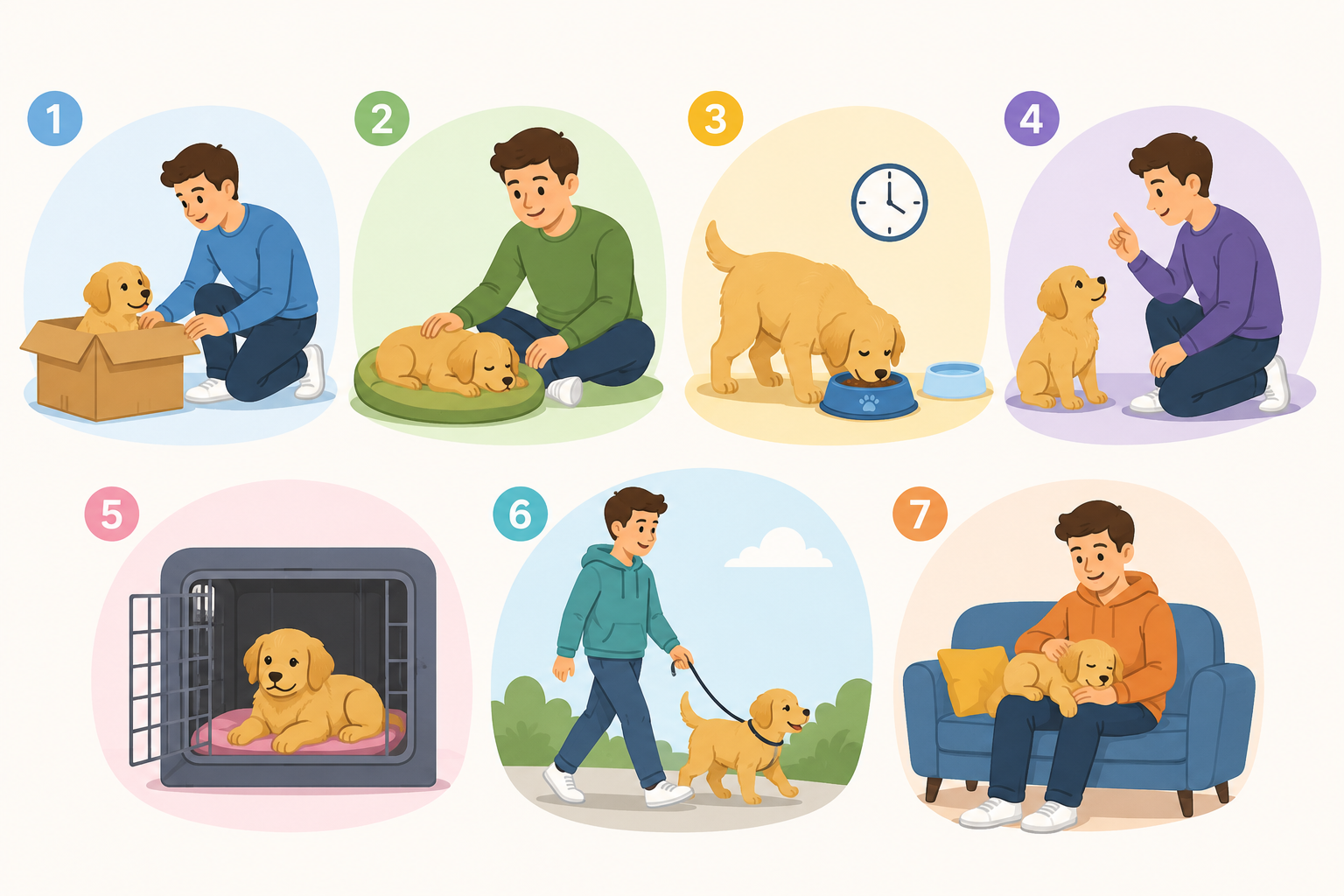
The moment you bring a new dog home, everything changes. The house feels different. Your schedule shifts. And somewhere between the excitement and the exhaustion of those first few days, you realize just how much is involved in helping a dog settle into a new life with you.
That first week is one of the most important periods in your dog’s entire life with you. The experiences your dog has in these early days — how safe they feel, how consistently you respond to them, and how clearly you communicate what you expect — lay the groundwork for your entire relationship going forward.
Whether you have just adopted an adult rescue dog, brought home a new puppy, or welcomed a rehomed adult from another family, the adjustment process involves real challenges. Dogs cannot tell you what they need. They communicate through behavior, body language, and how they respond to the environment around them. Learning to read those signals and respond in helpful ways is what this guide is about.
This is not a collection of vague encouragement. Every section offers specific, practical guidance based on how dogs actually behave, how they actually learn, and what genuinely makes those critical first days easier for both of you.
Quick Answer
During the first week with a new dog, focus on creating a calm and consistent environment, establishing a daily routine, beginning potty and crate training immediately, scheduling a veterinary appointment within the first few days, and giving your dog the time and space to adjust at their own pace. Avoid overwhelming your dog with too many new people, situations, or experiences in the first week. Building trust slowly through positive interactions is the most effective approach.
What to Expect During Your Dog’s First Week
New dog owners often expect those first days to feel magical. Sometimes they do. More often, they feel uncertain, messy, and a little overwhelming — and that is completely normal.
Your dog is experiencing something far more disorienting than you are. They have been removed from everything familiar — their previous home, their littermates or kennel companions, the smells and sounds they knew — and placed into an entirely new environment with strangers. Even dogs that seem calm and confident in a shelter or breeder environment often behave very differently once they arrive home.
Some dogs shut down in the first few days. They hide, refuse to eat, and show little interest in interaction. Others seem fine initially but begin showing behavioral challenges once they feel secure enough to test boundaries. Some are immediately affectionate. Some are immediately anxious. There is an enormous range of normal.
Shelter and rescue professionals often refer to the “3-3-3 rule” as a general framework for dog adjustment: three days to feel overwhelmed and shut down, three weeks to learn your routine and start feeling comfortable, and three months to truly feel at home and show their full personality. Not every dog follows this timeline precisely, but it is a useful lens for understanding why patience in the first week is so important.
Preparing Your Home Before Bringing Your Dog Home
Dog-Proofing Your Home
Before your dog arrives, your home needs to be prepared for an animal that does not yet know the rules, has no concept of danger, and will explore every inch of their new environment with curiosity.
Secure electrical cords behind furniture or in cord covers. Move cleaning products, medications, and chemicals to locked or high cabinets. Remove or elevate any toxic houseplants — common culprits include pothos, peace lily, sago palm, and dieffenbachia. Check your yard fence for gaps, loose boards, or areas that could allow escape.
Clear the floor of small objects that could be swallowed — coins, hair ties, children’s toys, and batteries are among the most common foreign body hazards. Use baby gates to restrict access to areas where your dog should not yet roam unsupervised.
Designate one area as your dog’s home base — the place where their bed, crate, food, and water will be located. Keeping this area consistent reduces confusion in those first disorienting days.
Essential Dog Supplies
Having everything ready before your dog arrives prevents unnecessary stress and ensures your dog’s immediate needs are met from the first minute.
Dog Bed: Choose a washable bed in a quiet area of your home where your dog can rest without heavy foot traffic. A bolster-style bed with raised edges gives many dogs a sense of security.
Food and Water Bowls: Stainless steel bowls are the most hygienic option. Have two water bowls — one near the feeding area and one in another room — to encourage hydration throughout the day.
Collar: Start with a lightweight, adjustable collar. Check that it fits correctly — snug enough not to slip over the head, but loose enough to slide two fingers underneath.
Leash: A standard four to six foot leash provides appropriate control without restricting movement. Avoid retractable leashes during the first week — you want consistent, close control while your dog learns your expectations.
Harness: For dogs that pull or have tracheal sensitivity, a properly fitted no-pull harness distributes pressure more safely than a collar alone.
Crate: Choose a size that allows your dog to stand, turn around, and lie down. If buying a large crate for a puppy, use a divider to reduce the space — a crate that is too large undermines potty training.
Playpen: An exercise pen gives your dog safe, contained space to explore when direct supervision is not possible. This is one of the most practical investments for the first week.
Dog Food: Find out what your dog has been eating and purchase the same food to start. Changing food immediately adds digestive stress on top of the stress of a new environment.
Treats: Small, soft, high-value treats are essential for training and bonding in the first week. Keep them readily accessible in a treat pouch or pocket.
Chew Toys: Appropriate chew toys redirect natural chewing behavior to safe items and help relieve stress and anxiety. Have several options available.
Brush: Begin gentle brushing in the first week to start building grooming tolerance. The specific brush type depends on your dog’s coat.
Poop Bags: Always on hand, always in your pocket. Non-negotiable.
Cleaning Supplies: Enzymatic cleaners are essential for potty accidents. Standard household cleaners do not eliminate the odor markers that draw dogs back to the same spots.
ID Tag: Attach an engraved ID tag with your name and phone number before your dog leaves your sight. Microchipping at the first vet visit adds permanent backup identification.
First Aid Kit: Include gauze pads, antiseptic wipes, a digital rectal thermometer, tweezers, styptic powder, and your veterinarian’s emergency contact information.
The First Day at Home
What to Do Immediately
The moment your dog arrives home, take them directly to the outdoor toilet area before going inside. Even if they do not eliminate immediately, this establishes the outdoor area as the appropriate place to go. Praise any elimination warmly.
Once inside, let your dog explore their designated home base area calmly while on leash. Do not allow unrestricted access to the whole house on the first day.
Helping Your Dog Feel Safe
Place a recently worn item of your clothing in your dog’s sleeping area. Familiar human scent provides reassurance in a confusing environment. Play soft, low-level background sound rather than having a suddenly silent house or a blaring television.
Speak in a calm, low voice. Avoid sudden movements and loud sounds in those first hours. Your dog is reading every cue you give — calm energy communicates safety.
Introducing Family Members
Introduce family members one at a time, quietly and without rushing. Ask everyone to crouch down to the dog’s level rather than looming overhead, and to let the dog approach them rather than reaching out first. Children should be guided to approach slowly and avoid sudden movements or high-pitched squealing, no matter how excited they are.
Keep the first introductions brief. Your dog does not need to meet everyone in the first hour.
Giving Your Dog Space
Resist the urge to constantly cuddle, follow, or interact with your new dog. This is one of the hardest things for excited new owners to do, and one of the most important. Your dog needs time to process their new environment without constant stimulation. If your dog retreats to their bed or crate, allow them to rest there undisturbed.
Creating a Calm Environment
Keep the household quieter than usual for the first few days. Postpone the housewarming party, the children’s playdate, and the neighbor’s visit to meet the new dog. The more calm and uneventful the first days are, the faster your dog’s stress response will settle and their true personality will begin to emerge.
Setting Up a Daily Routine
Dogs thrive on predictability. When your dog can anticipate what is coming next — walk, then breakfast, then rest, then training — their nervous system calms, their behavior stabilizes, and house training proceeds much more quickly. Establish your routine from day one.
| Time | Activity |
|---|---|
| 6:30 AM | Wake up, immediately outside for potty |
| 7:00 AM | Breakfast — measured portion |
| 7:15 AM | Short morning walk (15–20 minutes) |
| 7:45 AM | Crate or settle time while you begin your day |
| 10:00 AM | Potty break outside |
| 10:15 AM | Play session or training (10 minutes) |
| 10:30 AM | Rest |
| 12:00 PM | Midday potty break and water check |
| 12:30 PM | Quiet time or mental stimulation |
| 5:00 PM | Evening meal — measured portion |
| 5:20 PM | Outside for potty |
| 5:30 PM | Evening walk (20–30 minutes) |
| 6:00 PM | Family time and play |
| 8:00 PM | Wind down — calm environment |
| 9:00 PM | Final outside potty break |
| 9:15 PM | Settle in crate or sleeping area for the night |
Adjust times to fit your schedule, but keep the sequence and approximate intervals as consistent as possible. Predictability is the goal.
Feeding Your New Dog
Choosing the Right Food
Start with whatever food your dog was eating at the shelter, breeder, or previous home. Ask for the brand name and formula before pickup. Sudden food changes cause digestive upset — diarrhea and vomiting in the first week of a new home are stressful for both the dog and the owner, and dietary disruption is one of the most preventable causes.
Once your dog has settled — usually after two to three weeks — you can transition to a different food if needed. Do this gradually over seven to ten days, mixing increasing proportions of the new food into the old.
Choose a food with an AAFCO nutritional adequacy statement confirming it is complete and balanced for your dog’s life stage. The World Small Animal Veterinary Association (WSAVA) recommends selecting foods from manufacturers with dedicated veterinary and nutritional staff, quality control measures, and a history of clinical research.
How Much Should You Feed?
Start with the manufacturer’s feeding guidelines based on your dog’s current weight, then adjust based on body condition. You should be able to feel your dog’s ribs without pressing hard, see a visible waist tuck from above, and observe an abdominal tuck from the side.
Changing Food Safely
| Day | Old Food | New Food |
|---|---|---|
| Days 1–2 | 75% | 25% |
| Days 3–4 | 50% | 50% |
| Days 5–6 | 25% | 75% |
| Day 7+ | 0% | 100% |
This gradual transition minimizes gastrointestinal upset and allows the digestive microbiome to adapt.
Treat Guidelines
Treats should make up no more than 10 percent of your dog’s daily calorie intake. In the first week, treats are a powerful bonding and training tool — but use them strategically. Small, soft treats that can be swallowed quickly work best during training because they do not interrupt the learning momentum.
Feeding Schedule
| Life Stage | Meals Per Day | General Timing |
|---|---|---|
| Puppy (8–12 weeks) | 4 meals | Every 4–5 hours |
| Puppy (3–6 months) | 3 meals | Morning, midday, evening |
| Puppy (6–12 months) | 2–3 meals | Morning and evening |
| Adult Dog (1–7 years) | 2 meals | Morning and evening |
| Senior Dog (7+ years) | 2–3 meals | Smaller, more frequent portions |
Hydration Tips
Fresh water should be available at all times. Wash bowls daily. If your dog seems reluctant to drink, try a pet water fountain. Monitor water intake — a significant increase or decrease from normal is worth noting and discussing with your vet.
Potty Training During the First Week
Even adult dogs that were house trained in a previous home may have accidents during the first week in a new environment. The unfamiliar space, the stress of transition, and the absence of their previous scent cues all contribute. Approach potty training with patience regardless of your dog’s age.
Take your dog outside immediately upon waking, within 15 minutes of eating, after every play session, and before bed. For puppies under three months, outdoor trips every one to two hours while awake are necessary.
Take your dog to the same outdoor spot each time. Familiar scent encourages elimination. When your dog eliminates outside, praise calmly and offer a small treat within three seconds. The reward must come immediately — delayed praise does not communicate what is being rewarded.
When accidents happen indoors — and they will — say nothing, clean thoroughly with an enzymatic cleaner, and refocus on supervision. Dogs cannot connect punishment given after the fact to the behavior. Punishment only creates anxiety and undermines the trust you are trying to build.
Crate Training Basics
A crate is your dog’s den — a private, calm space that is theirs alone. Used correctly, the crate becomes a place your dog chooses voluntarily. Used as punishment, it becomes a source of fear that makes everything harder.
In the first week, introduce the crate gradually. Toss treats inside while the door stays open. Feed meals just inside the opening, then further inside, then with the door closed for a few minutes. Build duration slowly over several days. Place a worn item of your clothing inside for comfort.
Never leave a puppy crated for longer than their age in months plus one hour during daytime hours. Adult dogs should not be crated for more than four to six hours at a stretch without a break.
Overnight crate training often involves some whining in the first few nights. Position the crate near your bed so your dog can hear and smell you. Respond to persistent distress — a puppy crying genuinely needs a toilet trip — but avoid rushing back every time your dog makes a noise, or you teach them that vocalizing brings you back.
Building Trust With Your New Dog
Body Language
Learn the basics of canine body language before your dog arrives. A dog with loose muscles, a gently wagging tail at mid-height, and soft eyes is relaxed. A dog with a stiff body, tucked tail, whale eye (showing whites of eyes), or low posture is stressed. Recognize these signals so you can adjust your behavior accordingly.
Positive Reinforcement
Reward the behavior you want more of — every time, in the beginning. When your dog sits calmly, give a treat. When they come to you voluntarily, praise warmly. When they eliminate outside, celebrate it. Dogs repeat what is rewarding. Make the right choices consistently worth their while.
Bonding Activities
Gentle grooming, hand-feeding part of their meal, playing low-key games like gentle tug or slow fetch, and simply sitting nearby while your dog explores all build trust without pressure. The goal is to become associated with good things — food, comfort, safety, and fun.
Common Mistakes to Avoid
Do not force physical affection on a dog that is not ready for it. Hugging a stressed dog or picking up a frightened dog does not comfort them — it removes their ability to move away, which intensifies fear. Let your dog set the pace for physical contact.
Introducing Your Dog to Other Pets
Cats
Introduce your dog to a resident cat slowly and in a controlled way. Begin with scent swapping — exchange bedding between the two animals for a day or two before any visual contact. Allow your cat to observe the dog from a safe, elevated position. Keep your dog on a leash during initial visual introductions. Never allow chasing, even if it seems playful. Give your cat multiple escape routes and elevated surfaces at all times.
Dogs
If you have a resident dog, conduct the first introduction on neutral territory — a park or a quiet street — rather than in your home where territorial instincts are stronger. Walk both dogs in parallel, side by side, at a distance where both remain relaxed, then gradually decrease the distance. Bring both dogs home together rather than introducing the new dog into the space where the resident dog is already settled.
Small Animals
Dogs with high prey drives should never be given unsupervised access to small animals including rabbits, guinea pigs, birds, and hamsters. Even dogs that seem uninterested can react unpredictably. Keep small animals in secure enclosures in rooms the dog does not access unsupervised.
Safe Introduction Tips
Always supervise initial interactions between your new dog and resident pets. Keep sessions short. End on positive interactions. Never force animals together. Watch for stress signals from both animals and separate them if tension rises.
Introducing Your Dog to Children
Children and new dogs require careful management in the first week. Children move quickly, make unpredictable sounds, and often approach dogs in ways that feel threatening — reaching over the head, making direct eye contact, squealing in excitement.
Teach children to approach slowly from the side, hold out a loosely closed hand for the dog to sniff, and wait for the dog to make contact rather than reaching out first. Show children how to pet gently along the dog’s back rather than over the head and face.
Establish clear rules for the household from the beginning. Never disturb the dog while eating, sleeping, or in their crate. Never take toys from the dog’s mouth. Never corner the dog or prevent them from walking away. These rules protect both the child and the dog.
Always supervise interactions between children and the new dog during the first week, regardless of the dog’s apparent temperament.
Exercise During the First Week
Keep exercise moderate in the first week. Your dog is already processing an enormous amount of emotional and environmental stimulation. Excessive exercise on top of adjustment stress can push some dogs into an overwhelmed state that looks like behavioral problems but is actually exhaustion.
| Dog Type | Daily Exercise (Week 1) | Recommended Activities |
|---|---|---|
| Puppy (under 4 months) | 5 min per month of age | Gentle play in yard, short leash walks |
| Puppy (4–6 months) | 15–20 minutes | Short walks, supervised off-leash play |
| Adult Small Breed | 20–30 minutes | Leash walks, light play |
| Adult Medium Breed | 30–45 minutes | Leash walks, yard exploration |
| Adult Large Breed | 45–60 minutes | Walks, gentle fetch |
| Senior Dog | 15–25 minutes | Slow leash walks, light indoor play |
Avoid dog parks entirely during the first week. Your dog’s vaccinations may not yet be verified, their social behavior with unfamiliar dogs is unknown, and the sensory overload of a dog park is too much for a dog still adjusting to a new home environment.
Basic Training to Start Immediately
Training is not something to postpone until your dog has “settled in.” Basic training is part of how your dog settles in — it provides structure, communication, and confidence.
Name Recognition: Say your dog’s name in a bright, positive tone. The instant they look at you, reward warmly. Repeat multiple times per day. Within the first week, most dogs begin responding reliably to their name.
Sit: Hold a treat at nose level and slowly move it back over your dog’s head. As the nose follows up, the bottom goes down. The moment they sit, say “sit” and reward. Keep sessions to five minutes.
Come: In a safe enclosed space, crouch down, open your arms, and call your dog’s name followed by “come” in an upbeat tone. Reward exuberantly when they arrive. Never call your dog to you for something they find unpleasant in the first week — this command must always predict wonderful things.
Stay: Ask for a sit, then open your palm toward your dog and say “stay.” Take one small step back, return immediately, and reward. Build duration in tiny increments — three seconds, five seconds, ten seconds.
Leave It: Essential for safety. Hold a treat in your closed fist. Let your dog sniff and paw. The moment they back away, open your hand and reward. Progress slowly over several days.
Leash Walking: Practice in the driveway and quiet streets first. Reward your dog for walking beside you. Stop and wait when they pull — forward movement is the reward for a loose leash.
Socialization: During the first week, keep socialization exposures gentle, brief, and positive. A calm neighbor, a quiet park at an off-peak time, and different floor surfaces in your home are enough for now.
Common Behavioral Issues During the First Week
Whining
Possible Causes: Stress, loneliness, needing to eliminate, discomfort.
Practical Solutions: Check for medical issues first. If physical needs are met, wait for a pause in the whining before engaging — responding immediately to every whine teaches the dog that whining produces attention.
When to Seek Help: If whining is constant regardless of interaction, or paired with other distress signs.
Barking
Possible Causes: Alert barking at unfamiliar sounds, anxiety, boredom.
Practical Solutions: Reduce environmental triggers where possible. Reward quiet calmly. Do not shout in response — this often escalates the behavior.
When to Seek Help: If barking is excessive, persistent, and not responding to basic management.
Hiding
Possible Causes: Fear, overwhelm, desire for quiet space.
Practical Solutions: Allow it. Do not drag your dog out of hiding spots. Sit quietly nearby without making demands. Place high-value treats just outside the hiding spot and allow the dog to choose to emerge.
When to Seek Help: If hiding persists beyond the first several days alongside complete refusal to eat.
Chewing
Possible Causes: Exploration, teething in puppies, stress relief, boredom.
Practical Solutions: Provide appropriate chew toys and redirect consistently. Manage the environment so valuable items are not accessible. Never chase a dog carrying something — this immediately becomes a rewarding game.
When to Seek Help: If destructive chewing is severe and persistent despite redirection.
Fear
Possible Causes: New environment, unfamiliar people or sounds, previous negative experiences.
Practical Solutions: Never force exposure to fearful stimuli. Allow the dog to approach at their own pace. Create positive associations with scary things by pairing them with treats at a safe distance. Move slowly and speak calmly.
When to Seek Help: If fear is severe, affects eating and basic functioning, or is accompanied by aggression.
Separation Anxiety
Possible Causes: Previous abandonment, lack of experience being alone, general anxiety.
Practical Solutions: Practice very short departures — stepping outside for thirty seconds, then returning before distress escalates. Gradually increase duration. Provide enrichment when leaving. Avoid dramatic hellos and goodbyes.
When to Seek Help: If your dog cannot tolerate any alone time without severe distress, consult a veterinary behaviorist. True separation anxiety is a medical condition that often responds to a combination of behavior modification and medication.
Accidents Indoors
Possible Causes: Incomplete house training, stress, medical issues.
Practical Solutions: Increase outdoor potty frequency. Clean accidents with enzymatic cleaner. Review your supervision strategy.
When to Seek Help: If accidents are accompanied by blood, pain during urination, or unusually frequent small eliminations — all of which may indicate a urinary tract infection or other medical issue.
Health Checklist for Your New Dog
Schedule a veterinary appointment within 48 to 72 hours of bringing your dog home. Even if your dog came with records from a breeder or shelter, a baseline examination by your own vet establishes your dog’s current health status and creates a medical relationship that matters significantly when problems arise later.
| Health Task | Timeline | Notes |
|---|---|---|
| Veterinary wellness exam | Within 72 hours | Establish baseline health assessment |
| Vaccination review | At first vet visit | Complete or continue schedule based on records |
| Fecal exam for parasites | First week | Many dogs carry intestinal parasites without symptoms |
| Deworming | Per vet recommendation | Based on fecal results and age |
| Flea and tick prevention | First week | Vet-recommended product appropriate for age and weight |
| Heartworm test and prevention | First vet visit | Monthly prevention recommended in most climates |
| Microchip verification | First vet visit | Confirm chip registration is in your name |
| Dental assessment | First vet visit | Baseline dental health check |
| Weight measurement | First vet visit | Establish baseline for monitoring |
| Spay/neuter discussion | If not already done | Discuss timing with your vet |
Signs Your Dog Is Adjusting Well
Knowing what healthy adjustment looks like helps you recognize when things are going in the right direction.
Your dog is adjusting well when they begin eating their full meal consistently, drink water normally throughout the day, sleep soundly in their sleeping area, make voluntary approach to family members for interaction, show interest in toys and play, eliminate reliably outside rather than indoors, and display relaxed body language — loose muscles, soft eyes, and a gently wagging tail — in your presence.
You may also notice your dog beginning to follow you around the house, soliciting attention on their own terms, and showing signs of playfulness. These are excellent indicators that trust is building and your dog is beginning to feel safe.
Warning Signs That Require Veterinary Attention
Contact your veterinarian promptly if you observe any of the following during the first week:
- Complete refusal to eat for more than 24 to 48 hours
- Vomiting or diarrhea that persists beyond one episode or contains blood
- Lethargy that goes beyond normal tiredness — difficulty rising, unresponsiveness to stimulation
- Coughing, sneezing, or nasal discharge
- Eye discharge, redness, or cloudiness
- Straining to urinate or defecate
- Limping or reluctance to bear weight on a limb
- Pale, white, blue, or yellow-tinged gums
- Seizures or tremors
- Signs of pain including flinching when touched, guarding a body part, or vocalizing when moved
- Bloated or hard abdomen
When uncertain, always call your vet. The cost of a phone consultation is infinitely smaller than the cost of a delayed diagnosis.
First Week Checklist
| Task | Day 1 | Days 2–3 | Days 4–5 | Days 6–7 |
|---|---|---|---|---|
| Dog-proof home completed | Yes | |||
| All supplies purchased and in place | Yes | |||
| ID tag attached to collar | Yes | |||
| Veterinary appointment scheduled | Yes | |||
| Dog introduced to home base area calmly | Yes | |||
| Daily routine established and followed | Yes | Yes | Yes | Yes |
| Potty training in progress | Yes | Yes | Yes | Yes |
| Crate introduction started | Yes | Yes | Yes | Yes |
| Feeding schedule established | Yes | Yes | Yes | Yes |
| Name recognition training begun | Yes | Yes | Yes | Yes |
| Basic commands introduced (sit, come) | Yes | Yes | Yes | |
| Vet visit completed | Yes | |||
| Flea, tick, heartworm prevention discussed | Yes | |||
| Fecal exam submitted | Yes | |||
| Pet introductions conducted safely | Yes | Yes | ||
| Children properly briefed and supervised | Yes | Yes | Yes | Yes |
| Enzymatic cleaner on hand for accidents | Yes | |||
| Food transition plan in place if changing food | Yes | Yes | ||
| Daily bonding activities happening | Yes | Yes | Yes | Yes |
| Exercise appropriate for age and health | Yes | Yes | Yes | Yes |
Mistakes New Dog Owners Should Avoid
Giving too much freedom too soon. Allowing a new dog access to your entire home from day one leads to accidents, destructive behavior, and an overwhelmed dog. Restrict access and expand gradually as trust and house training develop.
Hosting a welcome party in the first week. Your dog does not need to meet all your friends and family immediately. Each new person adds stimulation and stress to an already overwhelmed animal. Keep the first week quiet.
Skipping the first vet visit. Many new owners feel the vet can wait until the dog seems sick. In reality, the baseline exam within the first 72 hours catches health issues that are not yet visible to the naked eye and establishes the critical medical relationship your dog will need throughout their life.
Reacting emotionally to accidents. Accidents are not defiance. They are communication. Punishing a dog for an accident after the fact achieves nothing except teaching your dog that you are unpredictable and frightening.
Comparing your dog to an idealized version. Real dogs take time to adjust. The dog you have in week one is rarely the dog you will have in month three. Give the adjustment time to unfold.
Anthropomorphizing anxiety as stubbornness. A dog hiding under the bed is not being dramatic or manipulative. They are genuinely frightened. Approaching the situation with empathy rather than frustration makes an enormous practical difference.
Using punishment-based training. Physical corrections, alpha rolling, and dominance-based methods do not build trust — they destroy it. They are particularly harmful in the first week when trust has not yet been established.
Expecting immediate bonding. Some dogs bond quickly. Others take weeks or months. The depth of the bond you will eventually share is not determined by how enthusiastic your dog is in week one. Show up consistently, and the bond will follow.
Frequently Asked Questions
How long does it take for a new dog to adjust to a home?
Most dogs show meaningful improvement within three weeks and feel genuinely at home within three months. This is commonly referred to as the 3-3-3 rule in the rescue and shelter community. Individual dogs vary considerably — a confident adult dog from a stable background may settle within days, while a fearful rescue dog may take several months to fully relax.
Should I sleep with my new dog the first night?
There is no single right answer. If you intend to allow your dog on the bed long-term, starting there is fine. If you prefer your dog to sleep in a crate or dog bed, begin that routine from night one — it is always harder to change a habit than to establish it correctly from the start. Whatever you choose, be consistent.
Is it normal for a new dog to not eat for the first day or two?
Yes, reduced appetite for the first one to two days is common in dogs experiencing the stress of a new environment. Continue offering meals at scheduled times. If your dog completely refuses food for more than 48 hours, or shows additional signs of illness, contact your veterinarian.
How do I know if my new dog is stressed?
Common signs of stress in dogs include yawning when not tired, lip licking, panting without physical exertion, tucked tail, pinned ears, whale eye (showing whites of eyes), hiding, refusing food, excessive drooling, and pacing. A stressed dog needs space, not pressure.
When should I take my new dog to the vet?
Within 48 to 72 hours of arriving home, regardless of whether your dog appears healthy. This establishes a baseline health record, verifies vaccination status, screens for parasites, and gives your vet the opportunity to catch any issues that are not immediately obvious.
My new dog cried all night. What do I do?
Place the crate near your bed so your dog can sense your presence. A recently worn t-shirt in the crate provides comfort through scent. Most dogs adjust to overnight crating within three to five nights. Respond to persistent distress by taking puppies for a quick toilet trip, then returning them to the crate with minimal interaction.
How do I stop my new dog from chewing everything?
Management is your primary tool in the first week. Keep the environment tidy, restrict unsupervised access, and provide abundant appropriate chew toys. Redirect calmly and consistently every time you see inappropriate chewing. Punishment after the fact is ineffective and counterproductive.
Should I let my new dog meet the neighbors and other people right away?
Limit social introductions in the first week. Your dog is already processing enormous amounts of new information. Adding more unfamiliar people too quickly creates unnecessary stress. Once your dog is eating normally, showing relaxed body language, and beginning to settle into the routine, gentle introductions to friendly neighbors can begin.
Is it okay to leave a new dog home alone during the first week?
Minimize time alone in the first week where possible. If you must leave, start with short absences and build gradually. Provide a safe chew toy or frozen stuffed Kong before departing. Arrange for a dog walker or friend to check in if you will be away for more than three to four hours.
My new dog growled at me. What does that mean?
Growling is communication, not aggression. It means your dog is uncomfortable with something in that moment — perhaps you reached for something they were guarding, moved too quickly, or approached a sensitive body part. Never punish growling — it is a warning that deserves respect. Back off, assess what triggered it, and work with a professional trainer to address the underlying issue.
How many walks does a new dog need per day?
At minimum, three to four outdoor outings daily — morning, midday, evening, and bedtime. Puppies need outdoor trips every one to two hours while awake. Beyond toilet needs, a morning walk and evening walk of appropriate length for your dog’s age and breed provides both physical exercise and mental enrichment.
Should I use a crate for my new dog?
Crates are genuinely useful tools when introduced positively. They provide a safe, den-like space for rest, support potty training, and prevent unsupervised destructive behavior. A crate is not appropriate for long-term confinement or punishment, but as a properly introduced sleeping and resting space, most dogs come to value it.
What if my new dog does not seem to like me?
Most dogs that appear disinterested or distant in the first week are simply overwhelmed — it is not personal and it is not permanent. Give your dog time, keep interactions positive and unpressured, and let them set the pace. Hand-feeding portions of their meal is one of the most effective early bonding strategies available.
My new dog keeps hiding. Is this normal?
Hiding during the first few days is very common and represents your dog’s attempt to manage an overwhelming amount of new sensory input. Allow it. Do not drag your dog out of hiding spots. Sit quietly nearby, toss treats toward their hiding area, and let them choose when to come out. Forcing interaction before your dog is ready slows the adjustment process.
When can I start obedience classes?
Many trainers recommend waiting until your dog has had at least two to three weeks to settle before attending group obedience classes. This gives your dog a foundation of trust with you and a baseline comfort in their new home before adding the stimulation of a class environment. Puppy socialization classes may begin earlier — discuss timing with your trainer and veterinarian.
Final Thoughts
The first week with a new dog is one of the most demanding, occasionally frustrating, and quietly wonderful experiences you will have as a pet owner. It asks a lot of you — patience when you would rather rush, restraint when you want to smother your new dog with affection, and consistency when a quieter evening would feel so much easier.
But what you do in this first week matters more than you might realize. The boundaries you set calmly and consistently now become the foundations of a dog who feels genuinely safe. The trust you build through positive interactions now becomes the depth of the bond you will share for the next decade or more.
Your dog does not yet know your name, your habits, or your routines. They are figuring out whether you are safe. Whether the world you are showing them is something they can relax into. Give them every reason to decide that it is.
Bring your patience. Follow your routine. Trust the process. The dog that may be hiding under your bed or refusing their dinner right now is going to become one of the best parts of your day — and they are already working on it.
References
- American Veterinary Medical Association (AVMA). Selecting a Pet. https://www.avma.org
- American Animal Hospital Association (AAHA). Canine and Feline Behavior Management Guidelines. https://www.aaha.org/aaha-guidelines/behavior-management/
- ASPCA. Bringing Your Dog Home. https://www.aspca.org/pet-care/dog-care/bringing-your-dog-home
- Merck Veterinary Manual. Behavioral Problems of Dogs. https://www.merckvetmanual.com
- Cornell University College of Veterinary Medicine. Dog Behavior and Training. https://www.vet.cornell.edu
- VCA Animal Hospitals. Introducing Your New Dog to Other Pets. https://vcahospitals.com
- American Kennel Club (AKC). Bringing Home a New Dog. https://www.akc.org/expert-advice/training/tips-for-bringing-home-a-new-dog/
- World Small Animal Veterinary Association (WSAVA). WSAVA Global Nutrition Guidelines. https://wsava.org/global-guidelines/global-nutrition-guidelines/
Author Bio
Written by the PetCareJournal Editorial Team
The PetCareJournal Editorial Team is made up of experienced pet care writers, certified animal behavior consultants, and veterinary health researchers who are passionate about helping dog owners provide the best possible care for their pets. Every article is developed using current veterinary science and reviewed against guidelines published by leading animal health organizations including the AVMA, AAHA, and AKC. Our mission is straightforward — to give every dog owner the knowledge they need to build a healthier, happier life with their dog.
Pet Care Disclaimer
The information provided in this article is intended for general educational and informational purposes only. It does not constitute professional veterinary advice, medical diagnosis, or treatment of any condition. Always consult a licensed and qualified veterinarian for any questions or concerns related to your dog’s health, behavior, nutrition, or medical care. In the event of a veterinary emergency, contact your veterinarian or the nearest emergency animal hospital immediately. The PetCareJournal Editorial Team and publisher accept no liability for any actions taken based on the content of this article.