

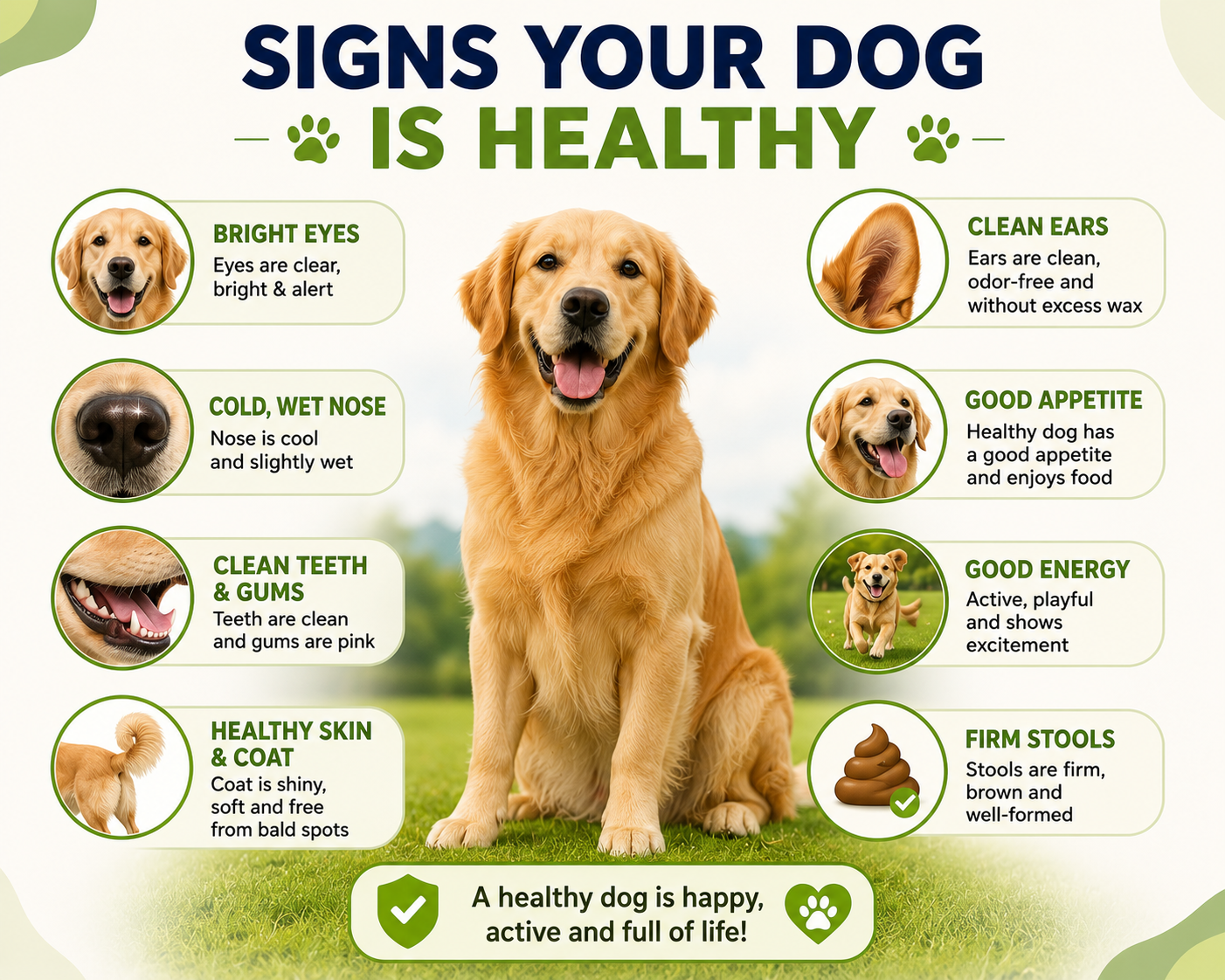
Most dog owners would do anything to keep their dog healthy. The challenge is that dogs cannot tell you when something feels off. They cannot describe a stomach ache, explain that their joints ache after a morning walk, or mention that they have been drinking more water than usual this week. Everything they communicate comes through physical appearance, behavior, and the subtle changes that a paying-attention owner notices over time.
This creates a genuinely important skill for every dog owner to develop — the ability to recognize what healthy actually looks like in their specific dog. Not healthy in a general sense, but healthy for your dog at their age, their breed, their activity level, and their individual baseline. When you know what normal looks like, you notice when something shifts. And catching shifts early is one of the most powerful things you can do for your dog’s long-term well-being.
Veterinarians see patients at annual or biannual intervals. You see your dog every single day. That daily proximity is a significant advantage in preventive health care — but only if you know what to look for. This guide gives you that knowledge. From physical indicators like coat condition and gum color to behavioral signs like energy level and mental alertness, every element of canine health monitoring is covered clearly and practically here.
Quick Answer
A healthy dog typically has bright, clear eyes, clean ears without odor, pink gums, fresh breath, a shiny coat, healthy skin, a body weight appropriate for their breed and age, a good appetite, normal water intake, regular bowel movements, normal urination, high energy levels, playful behavior, sound sleep, flexible joints, normal breathing, trimmed nails, mental alertness, and a history of regular veterinary checkups. Any persistent change from your dog’s personal health baseline warrants prompt veterinary attention.
Why Monitoring Your Dog’s Health Is Important
Preventive health monitoring is not about being anxious or over-attentive. It is about building such a thorough understanding of your dog’s normal baseline that deviations from it stand out clearly and early — before a small issue becomes a serious one.
Many diseases and conditions in dogs are significantly more treatable when caught in their early stages. Dental disease that begins as mild tartar buildup becomes deep periodontal infection that affects systemic organs when left unaddressed for years. A subtle limping that appears occasionally becomes chronic arthritis pain that dramatically reduces quality of life. A slight weight gain that seems trivial contributes to metabolic disorders that shorten lifespan.
The American Veterinary Medical Association emphasizes that preventive care — which includes both professional veterinary examinations and informed owner observation between visits — is one of the most effective strategies for extending healthy life in companion animals. Your veterinarian is your most important partner in your dog’s health. Your daily observation is their most valuable source of information.
Beyond disease prevention, understanding your dog’s healthy baseline helps you communicate more effectively during veterinary visits. Instead of reporting that your dog “seems a bit off,” you can describe specific changes — reduced appetite since Tuesday, slightly softer stools for three days, reluctance to use the back stairs. That specificity helps your veterinarian reach accurate conclusions faster.
What Does a Healthy Dog Look Like?
A healthy dog presents across multiple dimensions simultaneously. Physical health shows in their coat, weight, eyes, teeth, and movement. Behavioral health shows in their energy, playfulness, responsiveness, and emotional ease. Together these indicators paint a complete picture of well-being that no single measurement can capture alone.
Physically, a healthy dog has a coat that reflects the light, clear and alert eyes, gums that are a consistent pink color, and a body shape that reflects appropriate weight for their frame. They move without stiffness or hesitation, breathe comfortably, and maintain regular eating and elimination patterns.
Behaviorally, a healthy dog is curious about their environment, responsive to their owner’s cues, capable of sustained play appropriate for their age and breed, and emotionally settled in familiar environments. They sleep deeply and wake refreshed. They approach meals with consistent enthusiasm and greet their daily routines with recognition and ease.
No two dogs are identical. Breed characteristics, individual temperament, age, and medical history all shape what healthy looks like in any given dog. The goal is not to compare your dog to an idealized generic version — it is to know your specific dog well enough to recognize when something is different.
20 Signs Your Dog Is Healthy
Bright, Clear Eyes
Healthy dog eyes are clear, bright, and symmetrical. The whites of the eyes — the sclera — should be white without redness or yellowing. The pupils should be equal in size and responsive to light changes. A small amount of clear or slightly mucous discharge in the inner corners in the morning is normal. Any persistent discharge, cloudiness, redness, squinting, excessive tearing, or unequal pupil size warrants veterinary evaluation. The eyes are one of the most informative windows into overall systemic health — changes in eye appearance sometimes reflect conditions affecting distant organs.
Clean Ears Without Odor or Excess Wax
Healthy ears are pale pink inside, free of significant odor, and contain minimal light-brown wax. When you gently sniff near your dog’s ear, you should notice nothing remarkable. Excessive dark wax, a sweet or yeasty smell, foul odor, redness, swelling, or head shaking all signal that something inside the ear canal needs attention. Dogs with floppy ears are particularly prone to ear infections because reduced airflow creates warm, moist conditions that support bacterial and yeast growth.
Healthy Pink Gums and Clean Teeth
Gum color is one of the fastest health indicators available to any dog owner. Healthy gums are bubblegum pink — moist, smooth, and consistent in color. Pressing a finger against the gum and releasing it should result in the pink color returning within two seconds — this is the capillary refill time, and it reflects cardiovascular function. Pale, white, gray, blue, or yellow gums are medical emergencies. Brown or yellow tartar accumulation on the teeth indicates dental disease that requires professional attention.
Fresh Breath (Without Persistent Bad Odor)
A healthy dog’s breath is not perfumed, but it should not be significantly offensive. Mild odor after eating is normal. Persistent, strong, sweet or fruity, fishy, or fecal-smelling breath is not. Dental disease is the most common cause of bad breath in dogs and is almost entirely preventable with regular home dental care. Sweet-smelling breath can indicate diabetes. Unusually foul breath sometimes reflects kidney disease. Breath quality, while easily dismissed as merely unpleasant, is a meaningful health indicator.
Shiny Coat and Healthy Skin
A healthy coat reflects light, lies flat without patches of breakage or thinning, and sheds within normal seasonal ranges for the breed. The skin beneath the coat should be soft and smooth without flaking, redness, bumps, or obvious irritation. Natural coat oils — produced by sebaceous glands in the skin — give a dog’s fur its characteristic sheen. A dull, dry, brittle, or unevenly textured coat can reflect nutritional deficiency, parasites, hormonal imbalance, or systemic illness. Skin and coat condition are reliable outward indicators of internal health.
Healthy Body Weight and Body Condition
Appropriate body weight for your dog’s breed and age, maintained consistently over time, reflects both nutritional adequacy and metabolic health. More meaningful than a number on a scale is the body condition score — a hands-on assessment of fat coverage over key bony landmarks. A healthy dog has ribs that are easily felt without pressing hard but not visibly prominent, a visible waistline when viewed from above, and a gentle abdominal tuck when viewed from the side.
Good Appetite
Consistent, enthusiastic interest in meals at regular times is a reliable sign of health. Dogs that eat their measured portion within 20 minutes, show interest in food preparation cues, and maintain this pattern day after day are demonstrating healthy appetite. Sudden disinterest in food — particularly when paired with lethargy or other changes — is one of the earliest behavioral signs of illness and should never be dismissed as pickiness without veterinary consideration.
Normal Water Intake
Most dogs drink approximately one ounce of water per pound of body weight daily, though this varies with activity and temperature. A dog that maintains consistent, normal drinking habits is showing healthy kidney and metabolic function. Significant increases in water intake — especially when paired with increased urination — can indicate conditions including diabetes mellitus, Cushing’s disease, kidney disease, and pyometra. Decreased water intake can also signal illness or pain. Track your dog’s drinking patterns as part of your regular health awareness.
Regular and Healthy Bowel Movements
Healthy stools are firm, moist, chocolate-brown, and passed without straining or distress. A dog with healthy digestion has predictable elimination patterns — typically one to three times daily depending on age, diet, and individual variation. Stool consistency, color, frequency, and the ease of passage are all meaningful health indicators. Blood, mucus, very dark or very pale coloration, significant changes in frequency, or obvious pain during defecation all require prompt veterinary evaluation.
Normal Urination
A healthy dog urinates predictably — several times daily, with consistent color (pale yellow to golden) and without straining, whimpering, or producing unusually small amounts. Changes in urination patterns — increased frequency, urgency, discomfort, blood in urine, or abnormal color — can reflect urinary tract infections, bladder stones, kidney conditions, or hormonal disorders. Urinary changes in male dogs that involve straining without producing urine are medical emergencies.
High Energy Levels
A dog with appropriate energy for their age and breed — not lethargic and not manic — is showing healthy neurological, cardiovascular, and metabolic function. Know your dog’s personal energy baseline. A Greyhound that is calm and settles readily is not lethargic — that is their nature. A Labrador that suddenly has no interest in their usual morning run has deviated from their baseline. Sustained, unexplained lethargy lasting more than 24 to 48 hours always warrants a veterinary call.
Happy and Relaxed Behavior
A healthy dog is emotionally regulated. They are not in a constant state of anxiety, hypervigilance, or suppression. They settle comfortably in familiar environments, approach new experiences with appropriate curiosity rather than paralyzing fear, and interact with their human family with ease and warmth. Behavioral health is as real as physical health — persistent anxiety, new aggression, or significant personality changes always have underlying causes worth investigating.
Regular Exercise and Playfulness
Age-appropriate playfulness and willingness to exercise are reliable health indicators. A puppy that races across the yard with abandonment, an adult dog that runs back with a retrieved ball with obvious joy, and a senior dog that takes their gentle morning walk with quiet engagement — all are displaying appropriate physical and emotional well-being for their life stage. A dog that suddenly loses interest in play or refuses activities they previously enjoyed has changed meaningfully.
Sound Sleep Patterns
Deep, relaxed sleep — including occasional dreaming indicated by twitching paws and soft vocalizations — indicates a settled nervous system and adequate daily physical and mental activity. Most healthy adult dogs sleep 12 to 14 hours daily. Significant deviations from your dog’s personal sleep baseline — sudden insomnia, excessive sleeping far beyond their norm, or restless, fragmented nighttime sleep — can reflect pain, illness, or neurological changes.
Strong Mobility and Flexible Joints
A healthy dog moves with ease — transitioning from lying to standing without hesitation, negotiating stairs without flinching, and running or changing direction without stiffness. Any persistent limp, reluctance to bear weight on a limb, stiffness that worsens after rest, or obvious discomfort during movement requires veterinary evaluation. Joint conditions are among the most common age-related health issues in dogs and are significantly more manageable when caught early.
Normal Breathing and Heart Rate
Healthy breathing is quiet, unlabored, and consistent — between 15 and 30 breaths per minute at rest for most adult dogs. You should not hear significant noise with each breath in a resting dog, with the exception of brachycephalic breeds where some respiratory noise is breed-related rather than pathological. Heart rate at rest is typically 60 to 140 beats per minute for adult dogs, with smaller breeds and puppies trending higher. Significant changes in breathing pattern, effort, or rate at rest always warrant immediate veterinary attention.
Healthy Eating Habits and Nutritious Treats
How a dog eats is as informative as whether they eat. Healthy eating habits include consistent enthusiasm at mealtimes, ability to chew and swallow without distress, and completion of meals within a reasonable time. In terms of treats, choosing nutritious options — small pieces of cooked chicken, blueberries, carrots, or high-quality commercial treats with simple ingredient lists — provides reward value without excess calories or harmful ingredients. Treats should constitute no more than 10 percent of daily caloric intake. Avoid table scraps and any human foods on the toxic list. When reading pet food labels, look for named animal proteins as the first ingredient and an AAFCO nutritional adequacy statement.
Healthy Nails and Paws
Nails trimmed to a length that does not touch the floor when the dog is standing reflect regular maintenance and healthy gait. Paw pads should be smooth and soft without cracking, bleeding, or peeling. Healthy toes are free of swelling, redness, discharge, or unusual odor. Dogs that lick their paws excessively or favor a paw during walking are communicating discomfort that deserves investigation.
Curiosity and Mental Alertness
A healthy dog notices their environment. They perk up at interesting sounds, investigate new smells, show interest in visitors, and engage readily with their owner’s attention and training cues. Mental alertness reflects healthy neurological function and appropriate sensory capacity. A previously responsive dog that suddenly seems detached, uninterested in surroundings, or confused in familiar environments has changed in a way that warrants veterinary evaluation — particularly in senior dogs, where cognitive dysfunction syndrome can present with exactly these changes.
Regular Veterinary Checkups
A dog that receives regular professional wellness examinations is demonstrating the most important health maintenance habit of all. Adult dogs should see their veterinarian at least annually. Senior dogs benefit from biannual visits. Puppies need the intensive early visit schedule associated with their vaccination series. Regular examinations catch subclinical conditions before they cause obvious illness, maintain vaccination and parasite prevention currency, and provide your veterinarian with the baseline knowledge of your individual dog that makes future clinical decisions more accurate.
Healthy Dog Behavior
Behavior is an expression of internal state. Dogs that are physically healthy, emotionally secure, and appropriately stimulated demonstrate predictable, positive behavioral patterns.
Tail Wagging: A loose, mid-height, sweeping wag is the quintessential expression of canine happiness and social engagement. The full-body wag that begins at the hips indicates high-intensity positive emotion. Both are signs of a psychologically healthy, socially connected dog.
Playfulness: Healthy dogs initiate play spontaneously — bringing toys, performing play bows, bouncing toward family members with obvious invitation. Age-appropriate playfulness reflects both physical capability and emotional well-being.
Social Interaction: A healthy dog approaches familiar people with ease and investigates new people with appropriate curiosity rather than extreme fear or aggression. They read social situations accurately and adjust their behavior to the context.
Confidence: Behavioral confidence — a willingness to investigate novel stimuli, approach new environments without panic, and recover quickly from mild startles — reflects good early socialization and ongoing positive experience.
Learning Ability: Healthy dogs engage readily with training. They make connections between actions and consequences, remember previously learned behaviors, and demonstrate the sustained attention that learning requires. Sudden difficulty with familiar commands can signal neurological changes worth investigating.
Curiosity: A naturally curious dog is a cognitively healthy dog. Sniffing, investigating, and showing interest in environmental changes are all healthy expressions of canine intelligence and sensory engagement.
Healthy Vital Signs for Dogs
Normal vital signs provide objective data about your dog’s physiological health. These ranges serve as useful reference points, but always remember that individual variation is real — age, breed, size, excitement level, and ambient temperature all influence readings. Discuss your dog’s individual normal values with your veterinarian.
| Vital Sign | Normal Range (Adult Dogs) | Notes |
|---|---|---|
| Body Temperature | 101–102.5°F (38.3–39.2°C) | Rectal measurement most accurate |
| Heart Rate | 60–140 bpm | Smaller breeds and puppies trend higher |
| Respiratory Rate | 15–30 breaths per minute at rest | Panting in heat is normal; panting at rest is not |
| Capillary Refill Time | Under 2 seconds | Press gum, release, color returns within 2 seconds |
| Gum Color | Bubblegum pink | Pale, white, blue, or yellow = emergency |
| Hydration Status | Skin snaps back within 1–2 seconds | Test skin elasticity on the back of the neck |
| Body Condition Score | 4–5 out of 9 | See BCS table below |
Any reading significantly outside these ranges, particularly body temperature above 104°F or below 99°F, gum color other than pink, or capillary refill time above two seconds requires immediate veterinary contact.
Healthy Weight and Body Condition
The Body Condition Score (BCS) is a standardized assessment tool used by veterinarians and informed owners to evaluate whether a dog’s weight is appropriate for their frame. It is more meaningful than scale weight alone because it accounts for individual body composition.
Most veterinary professionals use a 9-point scale. A score of 4 to 5 represents ideal condition.
| BCS Score | Description | What You See and Feel |
|---|---|---|
| 1–2 | Severely Underweight | Ribs, spine, and hip bones visible from distance; no muscle mass |
| 3 | Underweight | Ribs easily visible; minimal fat cover; prominent spine |
| 4–5 | Ideal | Ribs felt easily but not visible; visible waist; abdominal tuck present |
| 6–7 | Overweight | Ribs hard to feel under fat layer; waist barely visible |
| 8–9 | Obese | Ribs impossible to feel; no waist; significant abdominal fat deposits |
How to Check Ribs: Place your hands on the sides of your dog’s chest with your thumbs on the spine. Run your fingers along the rib cage. In a dog of ideal body condition, you should be able to feel each rib easily without pressing, similar to running your fingers over the back of your hand.
Waistline: When viewed from above, a dog of healthy weight shows a visible narrowing behind the ribs. This waist tuck should be apparent without being extreme.
Abdominal Tuck: Viewed from the side, a healthy dog’s abdomen tucks upward behind the ribcage rather than hanging level or below the chest.
Weight Management Tips: Feed measured portions at consistent times. Limit treats to 10 percent of daily calories. Provide breed-appropriate daily exercise. Weigh your dog monthly and adjust portions seasonally based on activity level. Discuss any significant weight changes with your veterinarian to rule out metabolic causes before attributing them to diet alone.
Daily Dog Health Checklist
A daily health check takes approximately 60 seconds and provides invaluable ongoing monitoring between veterinary visits.
| Body Area / Behavior | What to Look For | Action Required |
|---|---|---|
| Eyes | Clear, bright, symmetrical, no discharge | Vet if persistent discharge or redness |
| Ears | No odor, minimal wax, no redness | Vet if odor, dark discharge, or pain |
| Teeth and Gums | Pink gums, no significant tartar | Vet if gums are pale or tartar is heavy |
| Skin | No redness, lumps, or irritation | Vet if new lumps, rashes, or hot spots |
| Coat | Shiny, smooth, no patches | Vet if sudden changes in coat condition |
| Weight | Consistent with recent baseline | Vet if significant unexplained change |
| Energy | Normal for age and breed | Vet if sustained lethargy |
| Appetite | Finishes meal within 20 minutes | Vet if sudden loss of interest |
| Hydration | Normal drinking, no excessive thirst | Vet if sudden major increase or decrease |
| Bathroom Habits | Normal stool and urine | Vet if blood, straining, or significant change |
| Movement | No limping or stiffness | Vet if favoring a limb or resisting stairs |
| Behavior | Normal temperament and engagement | Vet if sudden personality change |
Warning Signs Your Dog May Not Be Healthy
Recognizing the contrast between healthy and unhealthy signs is as important as knowing the positive indicators.
Loss of Appetite: Any dog that suddenly refuses food for more than 24 hours, or shows significantly reduced interest over several days, needs veterinary evaluation.
Vomiting: Isolated vomiting after eating grass or something unusual may not be alarming. Repeated vomiting, vomiting with blood, or vomiting paired with lethargy or abdominal bloating is an emergency.
Diarrhea: Soft stools lasting more than 24 to 48 hours, bloody diarrhea, or diarrhea paired with vomiting and lethargy warrants prompt veterinary attention.
Persistent Cough: An occasional cough is not concerning. A cough that persists beyond a few days, worsens, or is accompanied by respiratory distress needs evaluation.
Difficulty Breathing: Any dog struggling to breathe, breathing with obvious effort, breathing with their neck extended, or showing blue-tinged gums is experiencing a medical emergency.
Excessive Drinking: Sudden, significant increase in water consumption paired with increased urination is a common early symptom of diabetes, kidney disease, and hormonal disorders.
Lethargy: Unusual tiredness lasting more than 24 to 48 hours, particularly when paired with other changes, is a meaningful warning sign.
Weight Loss: Unexplained weight loss — more than a small amount over a short period — indicates that something is affecting your dog’s metabolism, digestion, or caloric absorption.
Skin Problems: New lumps, rapidly enlarging existing lumps, spreading rashes, non-healing wounds, or sudden hair loss all require veterinary evaluation.
Limping: Any limp that persists beyond 24 hours, worsens over time, or prevents normal weight-bearing on a limb needs professional assessment.
Behavior Changes: Sudden aggression in a previously gentle dog, new fearfulness, confusion in familiar environments, or loss of house training in a previously reliable dog are all medically significant.
| Indicator | Healthy Sign | Warning Sign |
|---|---|---|
| Eyes | Clear, bright, symmetrical | Discharge, redness, cloudiness |
| Gums | Bubblegum pink, moist | Pale, blue, white, or yellow |
| Coat | Shiny, smooth | Dull, patchy, excessive shedding |
| Energy | Normal for breed and age | Sustained lethargy or sudden hyperactivity |
| Appetite | Consistent and enthusiastic | Sudden loss or significant reduction |
| Stools | Firm, brown, regular | Bloody, loose, very frequent |
| Urine | Pale yellow, normal frequency | Blood, straining, excessive frequency |
| Weight | Stable at healthy BCS | Unexplained gain or loss |
| Breathing | Quiet, 15–30 breaths/min at rest | Labored, noisy, rapid at rest |
| Movement | Fluid, no hesitation | Limping, stiffness, reluctance |
When to Contact a Veterinarian Immediately:
- Difficulty breathing or choking
- Collapse or inability to stand
- Bloated, hard, or painful abdomen
- Suspected poisoning
- Seizures
- Pale, blue, or white gums
- Eye injuries
- Urinary straining without producing urine
- Severe vomiting or diarrhea with blood
How to Keep Your Dog Healthy
Maintaining health requires active, daily effort across multiple dimensions of care.
Balanced Nutrition: Feed a high-quality, life-stage-appropriate food with an AAFCO nutritional adequacy statement. The World Small Animal Veterinary Association recommends selecting foods from manufacturers with established quality control, on-staff veterinary nutritionists, and a history of feeding research.
Healthy Treats: Choose treats with whole food ingredients. Limit to 10 percent of daily calories. Safe natural options include small pieces of cooked chicken, blueberries, carrots, and plain cooked sweet potato.
Fresh Water: Constant access to clean water is essential. Wash bowls daily. Change water at minimum twice daily.
Daily Exercise: Match exercise intensity and duration to your dog’s breed, age, and health status. Both insufficient and excessive exercise carry health risks.
Mental Enrichment: Puzzle feeders, scent games, training sessions, and novel environments prevent the boredom that leads to behavioral problems and the cognitive decline associated with understimulation.
Grooming: Regular brushing, bathing, nail trimming, and ear cleaning prevent the accumulation of health issues that develop silently over weeks and months.
Dental Care: Daily tooth brushing with dog-safe toothpaste is the most effective preventive measure against the dental disease that the American Animal Hospital Association identifies as one of the most prevalent conditions in companion animals.
Parasite Prevention: Year-round flea, tick, and heartworm prevention using veterinarian-recommended products protects against parasites that cause direct harm and transmit disease.
Vaccinations: Core vaccines — distemper, parvovirus, adenovirus, and rabies — protect against potentially fatal diseases. Non-core vaccines are recommended based on lifestyle and geographic risk. Follow your veterinarian’s vaccination protocol.
Routine Veterinary Visits: Annual wellness exams for adult dogs, biannual for seniors, and the complete early series for puppies provide the professional baseline assessment that home observation cannot replace.
Puppy vs Adult vs Senior Dog Health
Signs of good health look meaningfully different across life stages. Understanding these differences prevents misinterpreting normal developmental or age-related changes as illness, and vice versa.
Puppies are growing rapidly. Their energy is high and somewhat erratic — bursts of play followed by immediate deep sleep. Their appetite is proportionally large for their size. Their immune systems are developing, which is why the full vaccination series is so important. Normal puppy health includes frequent elimination, high water intake relative to size, and occasional soft stools during dietary transitions.
Adult dogs have established their personal baseline across all health indicators. This is the stage where routine becomes your most powerful health monitoring tool — any significant deviation from your individual dog’s well-established pattern warrants attention.
Senior dogs experience gradual changes that can be healthy aging processes or early disease signals. More sleep, reduced exercise tolerance, and slower recovery after activity can be normal. But significant changes — new confusion, substantial weight loss, dramatic reduction in mobility — are not simply aging and deserve investigation.
| Health Indicator | Puppies | Adult Dogs | Senior Dogs |
|---|---|---|---|
| Sleep | 18–20 hours daily | 12–14 hours daily | 14–18 hours daily |
| Appetite | High and consistent | Consistent at 2 meals | May decrease; 2–3 smaller meals |
| Energy | High, erratic bursts | Steady, breed-appropriate | Reduced, gentle activity |
| Weight | Steadily increasing | Stable at healthy BCS | Monitor for loss or gain |
| Mobility | Active, developing | Full range of motion | May show joint stiffness |
| Veterinary visits | Every 3–4 weeks initially | Annually | Every 6 months |
| Vaccination | Full series in progress | Boosters per schedule | Continue per vet recommendation |
| Dental health | Baby teeth erupting | Maintain with daily brushing | Higher risk, monitor closely |
| Mental alertness | Learning rapidly | Engaged and responsive | Monitor for cognitive changes |
Frequently Asked Questions
How do I know if my dog is healthy?
A healthy dog has clear, bright eyes, pink moist gums, a shiny coat, healthy body weight, consistent appetite, normal water intake, regular bathroom habits, age-appropriate energy, and normal breathing. They are curious, playful for their age, and emotionally settled. The most accurate way to confirm health is through regular veterinary wellness examinations combined with your daily observation of your dog’s personal baseline.
What color should a healthy dog’s gums be?
Healthy gums should be bubblegum pink — consistently colored, moist, and smooth. Pale pink, white, gray, blue, or yellow gums indicate medical conditions requiring immediate veterinary attention. The capillary refill test — pressing a finger against the gum and watching how quickly the pink color returns — should result in return to normal color within two seconds.
How do I check if my dog is dehydrated?
Gently pinch the skin on the back of your dog’s neck and release. In a well-hydrated dog, the skin returns immediately to its normal position. Skin that returns slowly or stays tented indicates dehydration. Other signs include dry or tacky gums, sunken eyes, and lethargy. If you suspect dehydration, contact your veterinarian promptly.
What does healthy dog poop look like?
Healthy dog stool is firm, chocolate brown, moist, and passed without straining or apparent discomfort. It should hold its shape without crumbling or being liquid. Consistent daily elimination with stools matching this description indicates healthy gastrointestinal function.
How often should I check my dog’s health at home?
A brief daily visual and tactile check of your dog’s eyes, gums, coat, paws, and behavior takes under two minutes and provides invaluable early warning information. A more thorough weekly check — including skin, ears, teeth, and nails — catches developing issues before they become established problems.
What is a healthy weight for a dog?
Healthy weight is breed and frame-specific. The most reliable assessment is the Body Condition Score — a dog at ideal weight (BCS 4–5 out of 9) has easily felt but not visible ribs, a visible waist from above, and an abdominal tuck from the side. Your veterinarian can help you determine and monitor your specific dog’s ideal weight range.
What are the first signs that a dog is sick?
Early illness signs include reduced appetite, unusual lethargy, changes in water intake, altered bathroom habits, decreased interest in play, or subtle changes in body language like avoiding touch or decreased responsiveness. Early signs are often subtle — this is why knowing your dog’s personal healthy baseline is so important.
How do I know if my dog’s energy level is normal?
Normal energy is breed and age-specific. A Greyhound is naturally calm. A Border Collie is naturally high-energy. Evaluate your dog against their own baseline rather than against other dogs. A dog that is noticeably less active than their personal norm for more than 24 to 48 hours has changed meaningfully.
Is it normal for dogs to sleep a lot?
Yes. Adult dogs sleep 12 to 14 hours daily. Puppies need 18 to 20 hours. Seniors need 14 to 18 hours. These totals are distributed across multiple sleep periods throughout the day and night. Sudden, unexplained increases beyond a dog’s personal sleep baseline paired with other changes warrant veterinary evaluation.
What does healthy dog skin look like?
Healthy dog skin is soft, smooth, and uniformly colored — typically pale pink in light-skinned dogs. It should be free of flaking, redness, bumps, unusual pigmentation changes, or open sores. Parting the fur and examining the skin during grooming is one of the most reliable ways to detect early dermatological changes.
How often should a healthy dog urinate?
Most healthy adult dogs urinate three to five times daily, depending on water intake, activity, age, and individual metabolism. Significant increases or decreases in urination frequency, any obvious pain during urination, blood in the urine, or inability to urinate despite obvious straining all require prompt veterinary evaluation.
What should healthy dog nails look like?
Healthy nails are smooth, consistently colored, and trimmed short enough that they do not touch the floor when the dog is standing. Nails that click on hard floors are too long. Dark discoloration, brittleness, splitting, or swelling around the nail bed indicates problems worth investigating.
How can I tell if my senior dog is healthy?
A healthy senior dog maintains a stable appetite, normal hydration, steady body weight, comfortable mobility for their age, emotional ease in familiar environments, and appropriate sleep patterns. Some slowing is normal. Significant changes — new confusion, dramatic mobility reduction, or substantial weight loss — are not simply aging and warrant veterinary attention.
Does a healthy dog breathe quietly?
Yes, with breed-specific exceptions. Most healthy dogs breathe quietly and without obvious effort at rest. Brachycephalic breeds like Bulldogs and Pugs may have some respiratory noise that is breed-related. Any dog that breathes audibly at rest, shows breathing effort, or pants continuously without physical or heat-related cause needs veterinary evaluation.
How important are regular vet visits for a healthy dog?
Critically important, even for dogs that appear completely healthy. Veterinary examinations identify subclinical conditions before they cause obvious illness, maintain vaccination and parasite prevention currency, monitor trends in weight and body condition, and provide the professional expertise that no amount of owner observation can replace. The American Animal Hospital Association recommends annual wellness exams for adult dogs and biannual visits for seniors.
Final Thoughts
Knowing the signs of a healthy dog is one of the most practical and empowering things you can learn as a dog owner. It transforms daily interaction from casual living with your pet into a continuous, informed health partnership that genuinely protects them.
The 20 signs covered in this guide — from bright eyes and pink gums to sound sleep and mental alertness — are your daily reference points. Taken together, they paint a reliable picture of well-being. Any single indicator that changes consistently from your dog’s personal baseline is worth noting. Any combination of changes warrants a call to your veterinarian.
Remember that every dog is unique. Healthy looks different in a 10-week-old puppy than in a 12-year-old senior. It looks different in a Chihuahua than in a Great Dane. It looks different in a dog with a chronic condition than in one who has never had a health concern. The goal is not to measure your dog against a generic ideal — it is to know your specific dog so thoroughly that change stands out immediately.
Your veterinarian is your most important partner in this process. Home observation fills the gaps between professional examinations, but it never replaces them. Keep those annual or biannual appointments. Ask questions. Describe changes specifically. Bring your observations to every visit.
The dogs that live the longest, healthiest lives are almost always the ones whose owners pay the closest attention. You are already doing that by reading this guide.
References
- American Veterinary Medical Association (AVMA). Preventive Care for Dogs. https://www.avma.org/resources/pet-owners/petcare
- American Animal Hospital Association (AAHA). Canine Vaccination Guidelines; Dental Care Guidelines. https://www.aaha.org/aaha-guidelines/
- Merck Veterinary Manual. Routine Health Care of Dogs; Physical Examination. https://www.merckvetmanual.com
- Cornell University College of Veterinary Medicine. Dog Health — Preventive Care. https://www.vet.cornell.edu
- VCA Animal Hospitals. Physical Exam of a Dog; Signs of a Healthy Dog. https://vcahospitals.com/know-your-pet
- World Small Animal Veterinary Association (WSAVA). Global Nutrition and Wellness Guidelines. https://wsava.org/global-guidelines/
- American Kennel Club (AKC). Signs of a Healthy Dog; Dog Health Guide. https://www.akc.org/expert-advice/health/
- ASPCA. Dog Care — Health and Wellness. https://www.aspca.org/pet-care/dog-care
Author Bio
Written by the PetCareJournal Editorial Team
The PetCareJournal Editorial Team combines experienced pet care writers, certified canine health consultants, and veterinary content researchers dedicated to producing accurate, practical, and compassionate guidance for dog owners at every stage of their journey. Every article is developed using current veterinary science and reviewed against guidelines from leading animal health organizations. Our mission is to give every dog owner the knowledge they need to monitor and support their dog’s health proactively and confidently.
Pet Care Disclaimer
The information provided in this article is intended for general educational and informational purposes only. It does not constitute professional veterinary advice, medical diagnosis, or treatment of any kind. Routine home health checks are valuable tools but should never replace regular professional veterinary examinations. Health indicator ranges provided in this article represent general guidelines and may not apply to every dog. Readers should seek veterinary care promptly if their dog shows signs of illness, distress, or any significant change from their normal baseline. In the event of a veterinary emergency, contact your veterinarian or the nearest emergency animal hospital immediately. The PetCareJournal Editorial Team and publisher accept no liability for actions taken based on the content of this article.