

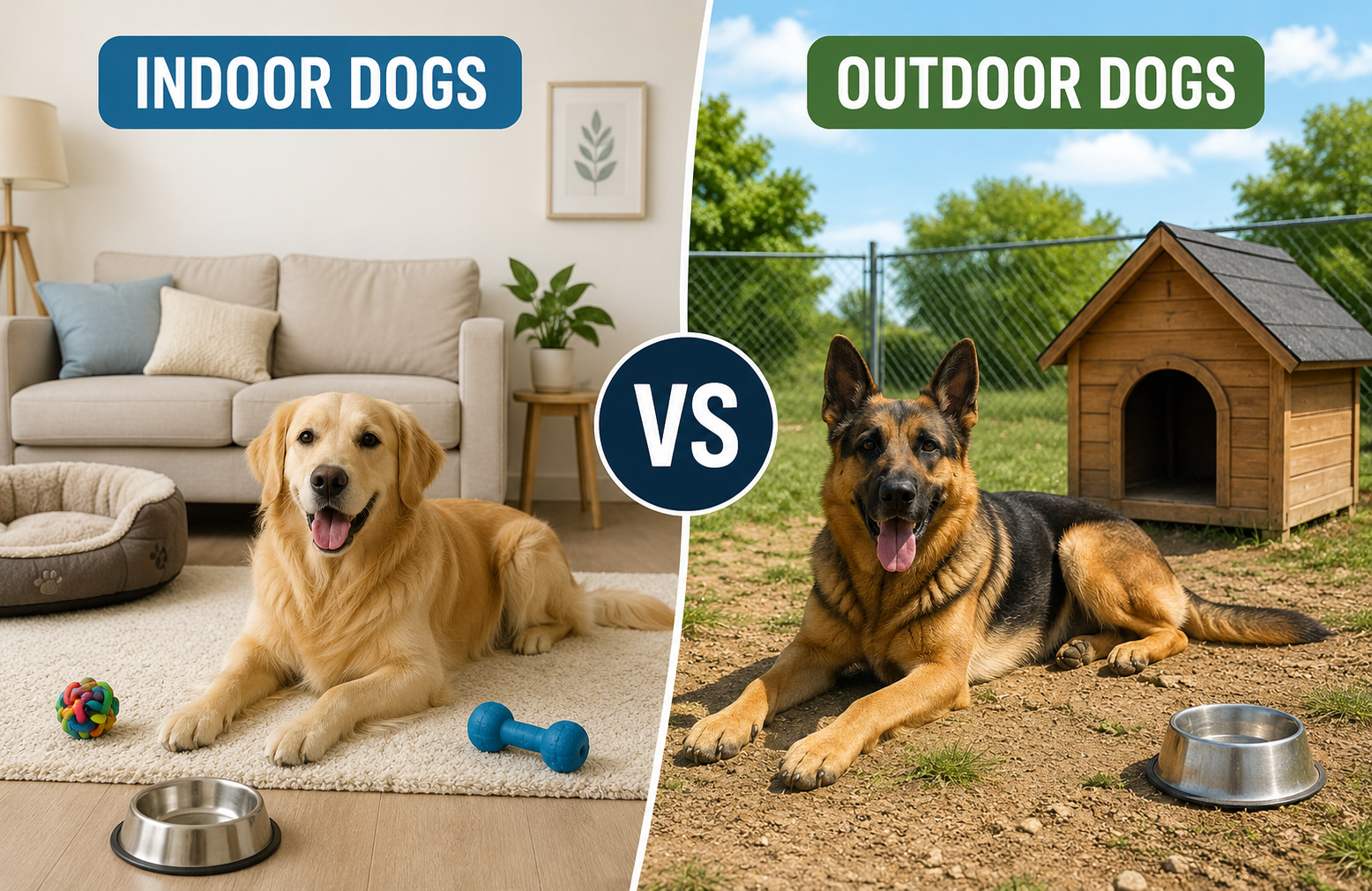
Few questions in responsible dog ownership generate more genuine debate than this one. Where should your dog actually live? Is keeping a dog primarily outdoors cruel, or is it sometimes the most appropriate choice? Are indoor dogs healthier? Do outdoor dogs get more exercise? And what does the science actually say about which arrangement leads to better outcomes for dogs?
The honest answer is more nuanced than either side of the debate usually acknowledges. The best living environment for any dog depends on a combination of factors — breed characteristics, climate, individual temperament, health status, age, available space, and crucially, how much quality interaction the dog receives with their human family. A German Shepherd living in a large, enriched outdoor space with constant owner interaction may be far better off than a Border Collie confined to a tiny apartment with minimal exercise or stimulation. Context matters enormously.
What the veterinary and behavioral science community does agree on is this: dogs are social animals. They were domesticated precisely because of their drive to live, work, and bond with humans. Living arrangements that undermine that connection — long isolation, lack of mental engagement, insufficient social interaction — negatively affect dogs regardless of whether the isolation happens indoors or out.
This guide explores both sides of the indoor versus outdoor debate honestly and comprehensively. By the time you finish reading, you will have a clear, practical understanding of what each arrangement actually involves, what the risks and benefits genuinely are, and how to make a decision that truly serves your individual dog’s needs.
Quick Answer
Most companion dogs thrive when they live indoors with their families, with regular supervised access to outdoor exercise, fresh air, and environmental enrichment. Indoor living provides protection from extreme weather, better health monitoring, stronger family bonds, and reduced exposure to parasites and predators. Daily outdoor time through walks, play, and exploration meets a dog’s physical and mental needs without requiring permanent outdoor housing. Some working dogs with appropriate supervision, shelter, and social interaction may spend more time outdoors, but prolonged isolation outside is associated with behavioral and physical health problems across most breeds.
What Is an Indoor Dog?
An indoor dog is one who lives primarily inside the home, sharing living spaces with their human family throughout the day and night. Indoor dogs sleep indoors, receive exercise through scheduled walks and play sessions, and spend their downtime in the human domestic environment.
Characteristics: Indoor dogs are integrated into the daily rhythm of household life. They eat, rest, play, and interact with family members in shared living spaces. They typically sleep in a designated sleeping area — a crate, a dog bed, or sometimes the owner’s bed — and have access to the home during most hours.
Benefits: The benefits of indoor living are significant. Indoor dogs are protected from extreme weather events, less exposed to parasites and wildlife, easier to monitor for health changes, and more consistently integrated into the social fabric of their family. The daily proximity to their owners supports emotional development, training consistency, and the kind of deep behavioral understanding that develops through constant observation.
Challenges: Indoor dogs require their owners to be proactive about exercise and outdoor time, since physical activity does not happen automatically. Without adequate daily walks and enrichment, indoor dogs can develop behavioral problems rooted in insufficient stimulation. Indoor dogs also require their environment to be safe and appropriately enriched to prevent boredom and destructive behavior.
Common Misconceptions: Many people assume that large dogs cannot live happily indoors, or that any dog with outdoor access is inherently getting enough exercise. Both assumptions are frequently wrong. A Great Dane in a comfortable home with daily exercise may be far better cared for than a small dog given free rein of an unmonitored yard with no enrichment.
What Is an Outdoor Dog?
An outdoor dog typically spends most or all of their time in an outdoor environment — a yard, kennel, or working area — rather than sharing the interior of the home with their family.
Characteristics: True outdoor dogs have access to enclosed outdoor spaces throughout the day and often sleep outside in kennel structures or outbuildings. Historically, many working breeds served as farm dogs, guard dogs, or hunting companions and spent the majority of their lives outdoors.
Benefits: Outdoor living provides dogs with constant access to fresh air, natural terrain, and environmental stimulation. Dogs with genuinely large, safe, enriched outdoor spaces and regular owner interaction can experience significant physical and mental benefits. For certain working breeds engaged in actual work, outdoor environments align naturally with their behavioral drives.
Challenges: Keeping a dog primarily outdoors raises real concerns. Exposure to weather extremes, parasites, wildlife, toxic plants, and potential theft are constant risks. More significantly, dogs kept outdoors without adequate social interaction commonly develop behavioral problems including excessive barking, destructive behavior, escape attempts, and anxiety.
Responsible Outdoor Living: If a dog spends significant time outdoors, responsible care includes a fully secure fence, weatherproof shelter sized appropriately for the dog, constant access to fresh water, daily social interaction with their owner, regular veterinary care, appropriate parasite prevention, and daily exercise and enrichment beyond simply being in the yard.
Indoor vs Outdoor Dogs: Key Differences
| Factor | Indoor Dogs | Outdoor Dogs |
|---|---|---|
| Living Space | Shared home environment | Yard, kennel, or outdoor structure |
| Exercise | Scheduled walks and play | Yard access, may still need structured walks |
| Health Risks | Lower environmental exposure | Higher parasite, predator, weather risk |
| Weather Exposure | Protected indoors | Directly exposed to all weather conditions |
| Safety | Protected from hazards | Requires secure fencing, ongoing monitoring |
| Socialization | Daily family integration | May be isolated without owner effort |
| Behavior | Typically better socialized with humans | Risk of loneliness-driven behavioral problems |
| Training | Constant feedback supports consistency | Less opportunity for ongoing reinforcement |
| Lifespan | Generally associated with longer lifespan | Greater risk of health events without monitoring |
| Mental Stimulation | Requires proactive enrichment | Natural sensory stimulation from environment |
| Veterinary Care | Changes noted quickly | Symptoms may be missed more easily |
| Maintenance | Regular home cleaning required | Shelter maintenance, outdoor hygiene required |
| Cost | Moderate ongoing grooming and supplies | Kennel, shelter, outdoor heating/cooling costs |
| Owner Interaction | High — continuous daily contact | Variable — depends entirely on owner effort |
Benefits of Keeping Dogs Indoors
Stronger Bond With Family: Dogs living inside with their families accumulate thousands of hours of daily interaction that dogs kept exclusively outdoors simply do not experience. This sustained contact is not just emotionally fulfilling — it supports the deep behavioral attunement that makes dogs genuinely responsive, trainable, and socially intelligent companions.
Protection From Weather: Extreme heat causes heatstroke. Extreme cold causes hypothermia. Both can kill dogs quickly and without warning. Indoor living removes this risk almost entirely. Even dogs with thick, double coats can be compromised by prolonged exposure to temperature extremes that indoor environments eliminate.
Reduced Risk of Injury: Outdoor dogs face hazards that indoor dogs are largely protected from — snakebites, coyote or wildlife encounters, fights with neighboring animals, traffic exposure through fence failures, and contact with toxic substances in the environment.
Better Health Monitoring: When a dog lives in your home, you notice immediately when their behavior changes. A dog who is slightly off their food, moving stiffly, or coughing in the morning is noticed within hours by an attentive indoor owner. An outdoor dog with the same symptoms may go unobserved for days, allowing conditions to progress significantly before treatment begins.
Improved Training: Training requires consistent feedback, and that consistency is infinitely easier when a dog lives with you. Indoor dogs receive correction and reinforcement throughout the entire day — not just during scheduled training sessions — which accelerates skill acquisition and behavioral stability.
Lower Risk of Parasites: While no living environment eliminates parasite exposure entirely, indoor dogs on appropriate preventive medication have substantially reduced exposure to fleas, ticks, and intestinal parasites compared to dogs living in yards and natural terrain year-round.
Greater Emotional Well-Being: Dogs are social animals whose psychological health depends on regular positive interaction with their family group. The ASPCA emphasizes that social isolation is one of the most significant contributors to behavioral and psychological problems in companion animals. Indoor living inherently protects against the isolation that causes these problems.
Benefits of Outdoor Time for Dogs
While indoor living is generally preferable for companion dogs, outdoor time is not optional — it is essential. The distinction is between where a dog lives and how much quality outdoor time they receive.
Physical Exercise: Outdoor space allows dogs to move at a range of speeds, change direction spontaneously, and engage in the kind of multi-directional locomotion that indoor spaces cannot replicate. Running, bounding, and natural play patterns all benefit from outdoor environments.
Mental Stimulation: The outdoor world provides a continuously changing sensory landscape — new scents, sounds, weather patterns, wildlife signals, and environmental features that stimulate a dog’s brain in ways that indoor environments cannot match. A single outdoor walk exposes a dog to more novel olfactory information than a day spent inside.
Natural Behaviors: Sniffing, rolling, digging, and exploring are natural canine behaviors that are much more easily expressed outdoors. Allowing dogs to engage in species-typical behaviors in appropriate contexts supports psychological well-being and reduces frustration.
Fresh Air: Regular outdoor exposure supports respiratory health, vitamin D synthesis through sun exposure, and immune system stimulation through contact with natural environmental microbiota.
Exploration: Novel outdoor environments — different parks, trails, neighborhoods, and natural areas — provide sensory enrichment that benefits dogs of all ages. Exploration satisfies curiosity and provides the environmental novelty that prevents cognitive stagnation.
Socialization: Well-managed outdoor experiences provide valuable social interactions with other dogs, different people, and diverse environments. These interactions build confidence and social flexibility that benefits dogs in all settings.
Risks of Keeping Dogs Outdoors Full-Time
Extreme Heat: Dogs can develop life-threatening heatstroke in temperatures that many owners would consider merely uncomfortable. Short-coated breeds, brachycephalic breeds, puppies, seniors, and overweight dogs are particularly vulnerable. Never assume shade or water alone is sufficient during heat waves.
Extreme Cold: Hypothermia and frostbite are genuine risks for dogs left outdoors in freezing temperatures. Even breeds with thick coats — Huskies, Malamutes — have individual cold tolerance limits that can be exceeded in severe conditions. Small breeds, thin-coated dogs, and elderly dogs face significant risk at temperatures that appear moderate.
Rain and Storms: Prolonged exposure to wet conditions increases the risk of skin infections, hypothermia, and ear infections. Many dogs develop significant anxiety during thunderstorms — an anxiety that is considerably harder to manage when the dog is isolated outdoors without owner support.
Parasites: Outdoor dogs face substantially higher tick, flea, and intestinal parasite exposure. Year-round preventive medication is non-negotiable for outdoor dogs and requires rigorous, consistent application.
Wildlife: Depending on geographic location, outdoor dogs face risks from coyotes, snakes, raccoons, opossums, and in some regions, larger predators. These encounters can cause serious injury or death.
Theft: Purebred dogs left unattended in yards are targets for theft. This risk is real, documented, and entirely preventable through indoor housing or supervised outdoor time.
Poisonous Plants: Many common garden plants are toxic to dogs — foxglove, oleander, azalea, yew, sago palm, and many others. An outdoor dog with unsupervised yard access has continuous exposure to any toxic plants present.
Traffic: Fence failures — from digging, jumping, or structural damage — can expose outdoor dogs to traffic exposure with potentially fatal consequences.
Loneliness: Prolonged isolation outdoors is one of the most significant welfare concerns associated with full-time outdoor housing. Dogs are social animals, and sustained social deprivation causes genuine psychological suffering that manifests in behavioral problems.
Behavioral Problems: Dogs kept outdoors and isolated from their families commonly develop excessive barking, destructive behavior, escape attempts, aggression, and anxiety. These are almost always expressions of unmet social and psychological needs rather than temperamental flaws.
Reducing These Risks: The risks of outdoor time are manageable through proactive measures — secure fencing, appropriate weatherproof shelter, constant fresh water, parasite prevention, toxic plant removal, regular owner interaction, and never leaving dogs outdoors unattended for extended periods.
Health Considerations
Vaccinations: Outdoor dogs require rigorous vaccination protocols because their environmental exposure to infectious diseases is substantially higher. Core vaccines — distemper, parvovirus, adenovirus, and rabies — are essential for all dogs. Outdoor dogs may additionally need leptospirosis and Lyme disease vaccines depending on their geographic location and exposure risk. The American Animal Hospital Association’s canine vaccination guidelines provide detailed protocols that should be implemented in consultation with your veterinarian.
Parasite Prevention: Year-round flea, tick, and heartworm prevention is mandatory for all dogs, but especially those with outdoor access. Discuss veterinarian-recommended products for your specific region, as parasite prevalence and seasonal patterns vary considerably.
Nutrition: Both indoor and outdoor dogs require nutritionally complete, life-stage-appropriate diets. Outdoor dogs expending more energy in cold climates may require higher caloric intake to maintain healthy body weight. Discuss nutritional adjustments with your veterinarian based on your dog’s individual activity level and body condition.
Hydration: Fresh, clean water must be available at all times. Outdoor dogs require water bowl monitoring to ensure it has not tipped, frozen, or become contaminated. Automatic water dispensers can help maintain consistent access.
Shelter: Any dog spending significant time outdoors requires weatherproof shelter — a well-insulated, elevated kennel structure that protects against rain, wind, heat, and cold. The shelter must be appropriately sized for the dog — large enough to stand, turn, and lie down, but small enough to retain body heat in cold weather.
Exercise: Both indoor and outdoor dogs need structured daily exercise. Yard access alone does not constitute exercise — most dogs with unsupervised yard access self-regulate at low activity levels rather than running circuits to maintain fitness.
Routine Veterinary Checkups: Indoor and outdoor dogs both need at minimum annual wellness visits, with more frequent visits for seniors and dogs with chronic conditions. Outdoor dogs may require more frequent parasite screening due to higher exposure risk.
Breed Differences
A dog’s breed provides meaningful information about their exercise requirements, temperature tolerance, social needs, and adaptation to different living environments. However, individual temperament always modifies breed-level generalizations.
Golden Retriever: Highly social, family-oriented, and emotionally sensitive. Golden Retrievers genuinely thrive on human interaction and suffer in isolated outdoor environments. They need daily vigorous exercise but are happiest living closely with their families.
Labrador Retriever: Energetic, adaptable, and deeply people-oriented. Labs can adapt to various living situations but are at their behavioral best with significant daily exercise and close family integration.
German Shepherd: Highly intelligent, protective, and energetically demanding. German Shepherds need substantial daily exercise and mental stimulation. They are adaptable to outdoor working environments when accompanied by consistent owner interaction but are equally comfortable as indoor family dogs with appropriate exercise.
Border Collie: One of the highest-energy and most cognitively demanding breeds in existence. Border Collies require multiple hours of physical and mental activity daily. Without adequate stimulation — outdoors or indoors — they develop severe behavioral problems. Living environment matters less than the quality and quantity of daily engagement.
Siberian Husky: Built for cold-weather endurance work. Huskies have substantial cold tolerance, high exercise needs, and a tendency toward escape and destructive behavior when under-stimulated. They can adapt to indoor living with exceptional amounts of daily exercise but must not be left unsupervised in warm outdoor environments.
French Bulldog: A brachycephalic breed with significant respiratory limitations. French Bulldogs cannot safely exercise vigorously in heat and should live indoors in climate-controlled environments. They are quintessential indoor companion dogs.
Pug: Similar to French Bulldogs in respiratory sensitivity and heat intolerance. Pugs are indoor dogs by design and physiology, requiring climate-controlled environments and moderate, careful exercise.
Shih Tzu: Bred as palace companion dogs. Shih Tzus are inherently indoor dogs who thrive on human companionship, require moderate daily exercise, and have no tolerance for temperature extremes.
Chihuahua: Small size and low body fat make Chihuahuas highly vulnerable to cold. They thrive indoors and benefit from layered clothing in cold weather even for outdoor bathroom trips.
Jack Russell Terrier: Compact but extraordinarily energetic, with a high prey drive and tendency to dig and escape. Jack Russells need vigorous daily exercise and mental stimulation but also benefit from the socialization and behavioral feedback of indoor living.
| Breed | Indoor Adaptation | Exercise Need | Temperature Tolerance | Key Consideration |
|---|---|---|---|---|
| Golden Retriever | Excellent | High | Moderate | Needs family proximity |
| Labrador Retriever | Excellent | High | Moderate | Needs vigorous exercise |
| German Shepherd | Very Good | Very High | Good | Needs mental challenge |
| Border Collie | Good with exercise | Extremely High | Good | Mental stimulation critical |
| Siberian Husky | Good with exercise | Very High | Cold-tolerant | Heat sensitive; escape risk |
| French Bulldog | Essential | Low | Heat sensitive | Must live indoors |
| Pug | Essential | Low | Heat sensitive | Climate control required |
| Shih Tzu | Excellent | Moderate | Low tolerance | Companion breed |
| Chihuahua | Essential | Moderate | Cold sensitive | Indoor dog by design |
| Jack Russell Terrier | Good | Very High | Moderate | High escape/prey drive |
Puppy vs Adult vs Senior Dogs
Living environment needs shift meaningfully across a dog’s life stages. What works for a healthy three-year-old Labrador may be entirely inappropriate for a twelve-week-old puppy or a thirteen-year-old senior with arthritis.
Puppies: Young puppies have undeveloped immune systems, inability to regulate body temperature, and incomplete vaccination series — all of which make unmonitored outdoor exposure a genuine health risk. The critical socialization window between 8 and 16 weeks requires careful, positive environmental exposure, but not unsupervised outdoor housing. Puppies need to be indoors with their family for safety, warmth, and the constant supervision that house training and socialization require.
Adult Dogs: Healthy adult dogs are the most adaptable across living environments. Their exercise needs, social requirements, breed-specific traits, and individual temperament are the primary guides to appropriate living arrangements. Most adult companion dogs thrive with indoor housing and regular, substantial outdoor time daily.
Senior Dogs: Older dogs face reduced temperature regulation, increased joint stiffness, decreased immune function, and in some cases cognitive changes that make unsupervised outdoor time increasingly risky. Senior dogs benefit significantly from climate-controlled indoor environments, orthopedic sleeping surfaces, easy access to exits, and close monitoring for the subtle health changes that become more common with age.
| Factor | Puppies | Adult Dogs | Senior Dogs |
|---|---|---|---|
| Ideal environment | Indoors — closely supervised | Indoors with regular outdoor exercise | Indoors — climate-controlled |
| Temperature tolerance | Very low | Moderate — breed dependent | Reduced |
| Exercise needs | Short, gentle, frequent | Breed and energy appropriate | Short, gentle, frequent |
| Health monitoring | Critical — vaccination series in progress | Annual veterinary wellness | Biannual veterinary visits |
| Outdoor risk level | High — immune system developing | Moderate with preventive care | Elevated — weather and mobility |
| Social needs | Very high — socialization window | High — daily family interaction | High — companionship essential |
| Special consideration | Puppy-proofing, house training | Consistent routine | Mobility aids, pain management |
Creating the Ideal Indoor Environment
Comfortable Bed: Provide a supportive, washable bed in a quiet area. Match the bed type to your dog’s sleeping style and physical needs. Orthopedic beds are particularly valuable for large breeds and seniors.
Safe Toys: Keep a rotation of durable, size-appropriate toys available. Regularly inspect for damage and replace items that present choking or ingestion hazards.
Temperature Control: Maintain indoor temperatures appropriate for your dog’s breed and coat type. Brachycephalic breeds need cooler environments. Thin-coated dogs need warmth in winter.
Daily Exercise: Schedule walks, play sessions, and outdoor time predictably every day. Indoor dogs depend entirely on their owners for physical activity — this is one of the most important responsibilities of indoor dog ownership.
Mental Enrichment: Puzzle feeders, scent games, training sessions, and rotating toy selections prevent the boredom that leads to destructive behavior in under-stimulated indoor dogs.
Routine: Consistent daily schedules for meals, walks, training, and rest reduce anxiety and support behavioral stability. Dogs in predictable environments are calmer, more responsive, and easier to live with.
Creating a Safe Outdoor Space
Secure Fencing: A fence is only as good as its weakest point. Inspect regularly for digging opportunities, gaps, loose boards, and climbing routes. Fence height must match your dog’s jumping ability. Underground wire extensions prevent digging escape.
Shade: Permanent shade structures are non-negotiable in warm climates. Trees provide natural shade but should be assessed for toxic plant risk. Purpose-built shade structures provide consistent coverage regardless of sun angle.
Shelter: Any outdoor shelter must be weatherproof, elevated from the ground, insulated for cold weather, and positioned to avoid direct sun exposure in summer. Size appropriately for the dog and line with washable bedding.
Fresh Water: Outdoor water supplies must be checked and refreshed multiple times daily. Heavy, tip-resistant bowls or automatic dispensers prevent spilling. In winter, heated water bowls prevent freezing.
Safe Plants: Remove or fence off any toxic plants from areas your dog can access. Common culprits include azalea, rhododendron, foxglove, yew, oleander, and sago palm. The ASPCA maintains a comprehensive toxic plant database for reference.
Escape Prevention: Assess and address every potential escape route before leaving your dog unattended. Once a dog discovers they can escape a yard, the behavior becomes habitual and increasingly difficult to prevent.
Supervision: No outdoor space is a substitute for human supervision. Monitor your dog during outdoor time, particularly if they are alone in the yard. Reduce unmonitored outdoor time during extreme weather, after dark, and whenever additional hazards are present.
Balancing Indoor Living With Outdoor Activities
The most effective approach for most companion dogs is indoor living paired with rich, regular outdoor time. This combination protects the dog while ensuring their physical and mental needs are genuinely met.
Daily Walks: The foundation of any dog’s outdoor experience. Walks provide exercise, environmental enrichment through scent exploration, and the social exposure that supports behavioral confidence. Walk length and intensity should match your dog’s breed, age, and fitness level.
Playtime: Structured play sessions in a secure yard or enclosed park — fetch, tug, chase — provide high-intensity cardiovascular exercise and emotional engagement. Play also strengthens the human-dog bond in ways that other activities do not replicate.
Training Sessions: Outdoor training introduces real-world distraction levels that indoor sessions cannot replicate. Practicing commands in parks, near traffic, and around other dogs generalizes learned behaviors to the contexts where they matter most.
Dog Parks: Appropriately managed dog parks provide valuable off-leash exercise and social interaction for socially confident, well-vaccinated adult dogs. Assess your individual dog’s temperament carefully — dog parks are not appropriate for reactive, fearful, or poorly socialized dogs.
Backyard Games: Obstacle courses, hide-and-seek in the yard, and supervised digging areas provide outdoor enrichment within the safety of your own space.
Hiking: Regular hiking exposes dogs to natural terrain, varied scents, and sustained physical activity that benefits both body and mind. Start trails appropriate for your dog’s current fitness level and build up gradually.
Travel: Including your dog in travel experiences — weekend trips, pet-friendly destinations, car journeys — provides extraordinary environmental enrichment and deepens the shared experience that is central to the human-dog relationship.
Common Mistakes Dog Owners Make
Leaving Dogs Outside Too Long: Any outdoor time that extends into extreme weather, darkness, or periods without access to shelter and water is a welfare failure. Always prioritize your dog’s safety over convenience.
Insufficient Exercise: Assuming that yard access equals adequate exercise is one of the most common and consequential mistakes in dog ownership. Structured daily walks and play are necessary regardless of how large the outdoor space is.
Ignoring Weather Conditions: Both heat and cold can become dangerous within hours. Monitor weather forecasts and adjust outdoor time accordingly. When in doubt, bring the dog inside.
Poor Socialization: Whether a dog lives indoors or out, insufficient exposure to different people, environments, and experiences during the socialization window creates lasting behavioral limitations.
Unsafe Yards: Many owners assume their yard is secure without systematically checking for hazards. Regular fence inspections, toxic plant assessments, and hazard reviews are ongoing responsibilities.
Inadequate Shelter: A basic kennel is not sufficient in extreme weather. Outdoor shelter must be genuinely weatherproof, insulated, correctly sized, and positioned to protect against the specific weather challenges of your climate.
Lack of Supervision: The belief that a yard handles a dog’s needs without owner involvement is fundamentally incorrect. Dogs need active supervision, interaction, and engagement — not just a space to occupy.
Frequently Asked Questions
Is it cruel to keep a dog outside?
It depends entirely on the conditions. Keeping a dog outdoors with adequate shelter, consistent fresh water, regular veterinary care, appropriate socialization, and daily owner interaction is very different from leaving a dog isolated in a yard without adequate provisions. Most companion animal welfare organizations, including the ASPCA, emphasize that dogs are social animals that thrive on human connection. Prolonged isolation outdoors without these provisions does constitute a welfare concern.
Can large dogs live in apartments?
Yes, many large dogs adapt well to apartment living when their exercise needs are met through daily walks and scheduled play. Breed temperament and energy level matter more than size. A calm, low-energy large breed may be far better suited to apartment life than a small, high-energy terrier with constant need for movement and stimulation.
Is it better for dogs to sleep indoors or outdoors?
Sleeping indoors is generally preferable for most companion dogs. Indoor sleeping protects dogs from nighttime temperature extremes, predator encounters, and the anxiety that some dogs experience when isolated overnight. It also reinforces the bond and behavioral integration that comes from sharing daily life with their family.
Do outdoor dogs live shorter lives?
There is a general veterinary understanding that dogs with closer integration into their family’s life tend to receive better health monitoring, more consistent preventive care, and faster intervention when health problems arise. While individual circumstances vary widely, the conditions often associated with full-time outdoor housing — delayed health monitoring, weather exposure, and parasite risk — can negatively affect health outcomes.
What temperature is too cold for a dog to stay outside?
This varies considerably by breed, coat, body size, and individual health. As a general starting point, temperatures below 45°F (7°C) warrant attention for most dogs, and temperatures below 32°F (0°C) are genuinely dangerous for small breeds, short-coated dogs, elderly dogs, and dogs with health conditions. Even cold-tolerant breeds like Huskies have individual limits that can be exceeded in severe conditions.
Can dogs be left outside overnight?
For most companion dogs, overnight outdoor housing is not recommended. Temperature drops, humidity, wildlife activity, and the psychological isolation of nighttime separation from their family all create conditions that are suboptimal for most dogs. Working dogs with appropriate shelter, prevention, and established outdoor routines represent a specific exception, but even then, the arrangement warrants careful ongoing management.
Do indoor dogs get bored?
Yes, without proactive enrichment. Indoor dogs need structured daily exercise, mental stimulation through training and puzzle toys, social interaction, and varied experiences to prevent boredom. A dog confined to an unstimulating indoor environment without adequate activity and engagement will develop behavioral problems just as readily as a bored outdoor dog.
What is the best setup for a dog who spends time in a yard?
A fully secure fence that prevents digging and jumping escape, a weatherproof shelter appropriately sized for the dog, constant access to fresh water, shade in warm weather, daily owner interaction, appropriate parasite prevention, and regular veterinary care constitute the minimum responsible standard for dogs spending significant time in yards.
How much outdoor time does an indoor dog need each day?
Most adult dogs benefit from a minimum of one to two hours of structured outdoor time daily, split between morning and evening walks with additional play or enrichment where possible. High-energy and working breeds may need considerably more. The specific requirement varies significantly by breed, age, and individual energy level.
Are indoor dogs healthier than outdoor dogs?
Indoor dogs generally benefit from better health monitoring, reduced weather and parasite exposure, and closer integration with their family’s life. These factors support earlier detection and treatment of health issues. However, an indoor dog with inadequate exercise and poor nutrition is not automatically healthier than an active outdoor dog with appropriate preventive care. The quality of care across all dimensions matters more than location alone.
What are the best breeds for apartment or indoor living?
Breeds well-suited to indoor living include French Bulldogs, Shih Tzus, Cavalier King Charles Spaniels, Basset Hounds, Maltese, Greyhounds, and Bichon Frises. These breeds combine moderate exercise needs, calm indoor temperaments, and strong bonding drives that make them naturally compatible with apartment or indoor living when their exercise requirements are consistently met.
Can working breeds like Border Collies live indoors?
Yes, but with substantial caveats. Working breeds require extraordinary amounts of daily physical and mental exercise. A Border Collie living indoors without sufficient daily activity and cognitive challenge will develop severe behavioral problems. The living environment matters less than whether the dog’s genuinely high exercise and stimulation needs are fully met every single day.
How do I keep my outdoor dog safe in summer?
Provide constant shade and fresh, cool water. Walk during the coolest parts of the day — early morning and evening. Monitor closely for signs of heat stress including excessive panting, drooling, and loss of coordination. Never leave dogs in parked vehicles. Consider bringing your dog indoors during the hottest hours of the day, regardless of their usual living arrangement.
Should puppies live indoors or outdoors?
Puppies should always live indoors during their early weeks and months. Their incomplete vaccination series, inability to regulate body temperature, and critical socialization requirements all necessitate close, supervised indoor living. Moving a puppy toward supervised outdoor experiences should be gradual and guided by their vaccination schedule and individual development.
How do I transition an outdoor dog to indoor living?
Begin with short supervised indoor sessions and gradually extend the duration. Provide a comfortable, designated sleeping area from the first day. Establish clear household rules and enforce them consistently with positive reinforcement. Manage the house-training process as you would with any new dog, regardless of age — accidents are expected during the transition. Be patient, as the adjustment timeline varies by individual dog.
Final Thoughts
The indoor versus outdoor debate rarely has a simple answer, and that is precisely why it needs to be approached thoughtfully rather than dogmatically. The reality is that most companion dogs benefit enormously from living indoors with their families, with regular, daily access to outdoor exercise, exploration, and fresh air. This combination meets their social, physical, and psychological needs more effectively than either extreme.
That said, context matters deeply. A working dog with meaningful tasks, appropriate shelter, daily human interaction, and comprehensive veterinary care can live a full, healthy life spending considerable time outdoors. A companion dog left in a yard without adequate social contact, enrichment, or shelter is at risk regardless of how large or beautiful that yard is.
The most important questions to ask are not “indoor or outdoor?” but rather: Does my dog have everything they need to be physically healthy? Is their social need for human connection being genuinely met? Are they protected from the specific environmental risks of their living situation? Are they mentally stimulated and behaviorally fulfilled?
When the answers to those questions are honestly yes, the precise location where a dog spends most of their hours matters less than the quality of care within that environment. And when the answers are no, the first step is not to debate housing arrangements — it is to identify which needs are not being met and make the changes necessary to meet them.
Every dog deserves an owner who takes those questions seriously. That responsibility, more than any other single factor, determines whether a dog’s life is a good one.
References
- American Veterinary Medical Association (AVMA). Responsible Pet Ownership. https://www.avma.org/resources/pet-owners/responsible-pet-ownership
- American Animal Hospital Association (AAHA). Canine Vaccination Guidelines; Canine Wellness. https://www.aaha.org/aaha-guidelines/
- Merck Veterinary Manual. Environmental Management and Welfare; Behavioral Problems of Dogs. https://www.merckvetmanual.com
- Cornell University College of Veterinary Medicine. Dog Behavior and Housing. https://www.vet.cornell.edu
- VCA Animal Hospitals. Dog Care — Housing and Environment. https://vcahospitals.com/know-your-pet
- ASPCA. Dog Care — Outdoor Safety; Pet Housing and Welfare. https://www.aspca.org/pet-care/dog-care
- American Kennel Club (AKC). Indoor and Outdoor Dog Safety. https://www.akc.org/expert-advice/health/
- Humane World for Animals. Outdoor Dog Care Standards and Welfare. https://humaneworldforanimals.org
Author Bio
Written by the PetCareJournal Editorial Team
The PetCareJournal Editorial Team brings together experienced pet care writers, certified canine behavior consultants, and veterinary health researchers dedicated to providing dog owners with accurate, practical, and compassionate guidance. Every article is developed using current veterinary science and reviewed against guidelines from leading animal health and welfare organizations. Our mission is to help every dog owner make informed decisions that genuinely improve their dog’s health, safety, and quality of life.
Pet Care Disclaimer
The information provided in this article is intended for general educational and informational purposes only. It does not constitute professional veterinary advice, medical diagnosis, or treatment of any kind. Housing, exercise, and lifestyle decisions should always be made in consultation with a licensed veterinarian who is familiar with your dog’s individual breed, age, health status, and specific needs. Dogs with medical conditions, behavioral challenges, or special care requirements may need individualized guidance beyond what general articles can provide. In the event of a veterinary emergency, contact your veterinarian or the nearest emergency animal hospital immediately. The PetCareJournal Editorial Team and publisher accept no liability for actions taken based on the content of this article.